Maximizing ROI with OEM Fruit Processing Services
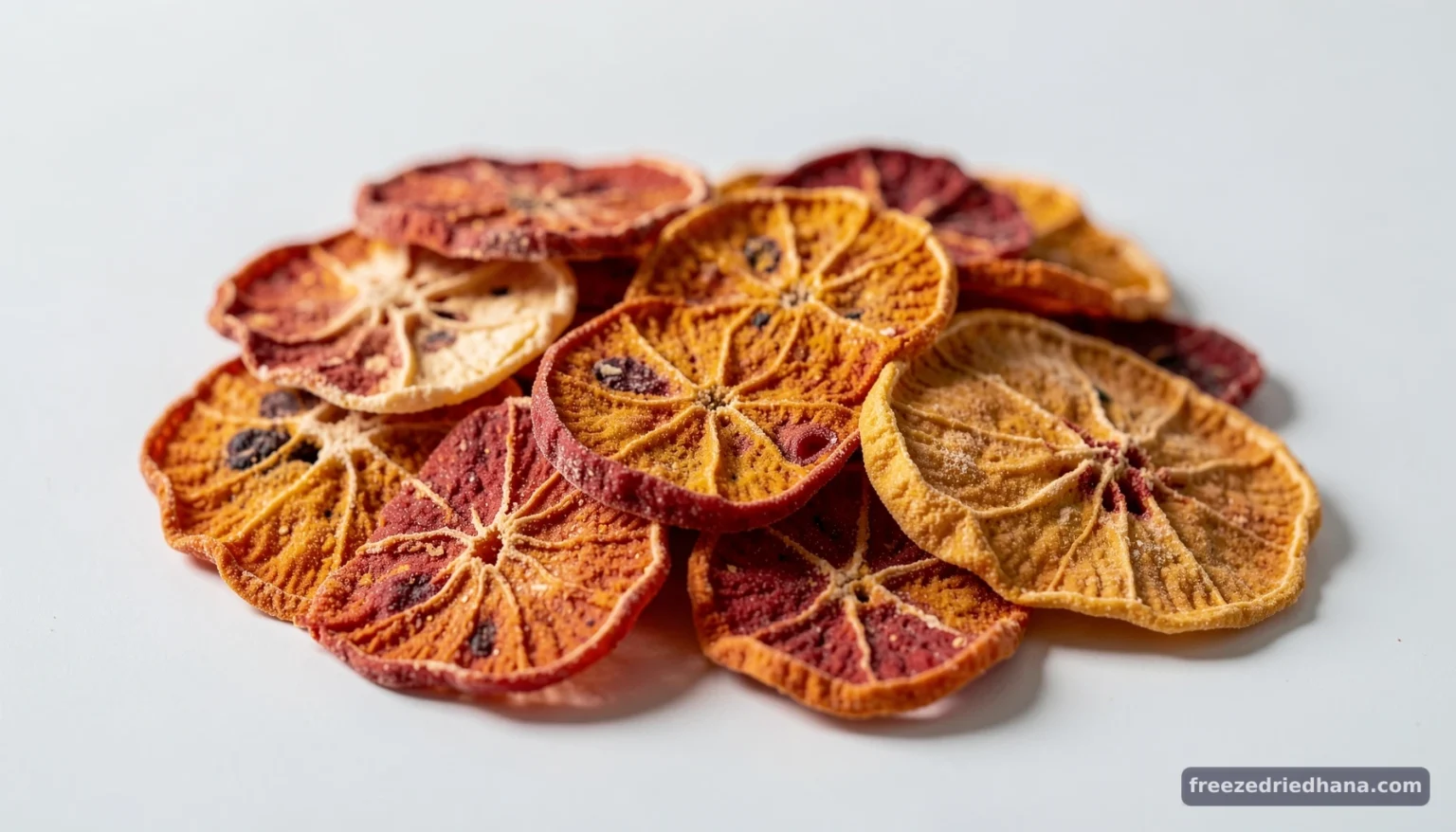
OEM fruit processing services help brands and food manufacturers turn fruit into export-ready products under their own specifications and branding. In Southeast Asia, the model can connect Vietnamese agricultural supply with freeze-dried snacks, soft-dried fruit, and fruit powders for retail or industrial use. Return on investment depends on matching the processing method, product specification, quality controls, packaging, and shipping plan to the intended market.
How OEM Fruit Processing Services Work
OEM fruit processing services convert a buyer’s product brief into a manufactured food product that can be packed and sold under the buyer’s brand. At Freezedriedhana, the documented scope includes freeze-dried fruit, soft-dried fruit, and fruit powders, with international supply from Vietnam.

From agricultural input to export-ready product
An OEM arrangement connects several stages that buyers might otherwise need to coordinate separately: sourcing and processing, quality management, packaging, and export logistics. The buyer defines the product goal and requirements; the manufacturer processes the fruit using an appropriate drying method and prepares it for the agreed packaging and destination.
This model can suit a retail brand developing a tropical snack line, a distributor sourcing products from a wholesale freeze-dried fruit supplier for multiple markets, or a food manufacturer that needs fruit powder as an ingredient. It does not mean every product specification is automatically available. Buyers should confirm details such as fruit variety, cut size, packaging format, and any market-specific requirements before approving production.
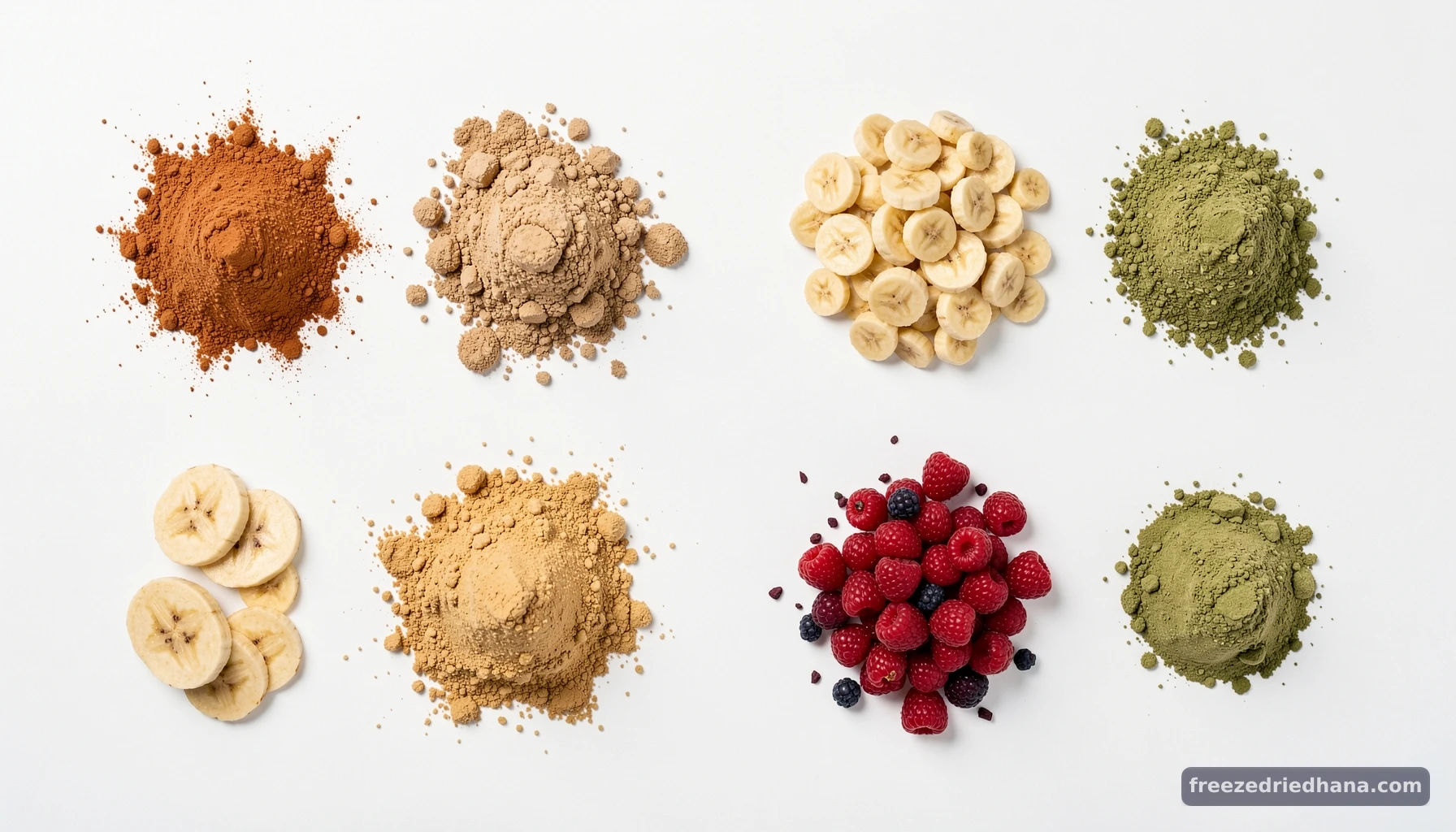
Freezedriedhana describes its services as OEM and private label manufacturing, with FCL and LCL shipping options. Its portfolio includes freeze-dried mangosteen, lychee, strawberry, and mango; soft-dried mango, guava, and pineapple; and fruit or vegetable powders such as green banana, red dragon fruit, and beetroot.
The role of drying technology and sublimation
Freeze-drying removes water from frozen fruit under vacuum. In the primary drying stage, ice changes directly into water vapor through sublimation; further drying reduces remaining moisture. This process is distinct from heat-drying, which is used for soft-dried products designed to have a chewy texture.
Freezedriedhana describes its vacuum freeze-drying process as preserving up to 98% of nutrients and 100% of natural flavor, with products offering a stated shelf life of up to 24 months. These figures describe the company’s stated product capabilities, not a universal outcome for every fruit, recipe, package, or storage condition. Buyers should ask how specifications are verified for the product they plan to order.
The distinction matters commercially as well as technically. Freeze-dried fruit is typically crisp and light, while soft-dried fruit is chewy. A fruit powder is intended for a different use altogether, such as blending into beverages or other food formulations.
The buyer–manufacturer interface
The working “interface” in an OEM project is the exchange of product, quality, packaging, and logistics requirements—not an assumed online ordering platform. Buyers typically provide a written brief, review samples or specifications, and confirm the production requirements with the manufacturer before authorizing a run.
A useful brief identifies the fruit, drying method, intended use, destination market, pack format, and expected order volume. It should also distinguish must-have requirements from preferences. For example, a snack brand may require a crisp texture and a particular pouch format, while color variation within an agreed range may be acceptable.
For an overview of available product categories, buyers can review Freezedriedhana’s freeze-dried and dried fruit products. Product listings help narrow the discussion, but a listing alone should not be treated as a complete manufacturing specification or guarantee of a particular cut, moisture level, or packaging configuration.
Technical Specifications to Define Before Production
A usable OEM specification translates a product idea into requirements that the buyer and manufacturer can review, test, and approve. The table below separates known processing capabilities from details that buyers should confirm for each order.
Processing options and suitable applications
The right process starts with the intended product experience. Freeze-drying suits crisp fruit pieces and some powders; heat-drying produces soft, chewy fruit; and cold drying is used for vegetable and certain fruit powders. The category is not merely a texture choice: it affects the product’s intended use, handling, packaging needs, and the specifications the buyer should request.
| Product or process | Documented capability | Specifications to confirm for the project |
|---|---|---|
| Vacuum freeze-dried fruit | Freeze-drying under vacuum; stated capabilities include up to 98% nutrient preservation, 100% natural flavor, and a 24-month shelf life | Fruit variety, piece or cut size, texture, moisture specification, packaging, and how shelf life is established |
| Soft-dried fruit | Heat-drying for a chewy texture; examples include mango, guava, and pineapple | Fruit preparation, cut dimensions, texture target, ingredients, moisture target, and pack format |
| Fruit and vegetable powders | Cold drying for vegetables and specific fruit powders; advanced freeze-drying is also listed for dragon fruit powder | Powder specification, intended application, particle characteristics, solubility or dispersion expectations, packaging, and verification method |
| Food safety management | ISO 22000 and HACCP are listed; the business states that it is FDA registered | Current certificate or registration details, product and facility scope, documentation, destination-market requirements |
| Export logistics | FCL and LCL options; supply network serving the US, EU, and Asia | Incoterms and shipment responsibilities, destination, documents, packaging configuration, and shipping plan |
The table is a starting point, not a substitute for a signed product specification. It avoids assuming that a capability automatically applies to every SKU. For example, “powder” does not by itself establish a particular particle size or solubility, and a stated shelf life must be assessed in the context of the product and its packaging.
Cut size, moisture, and product consistency
Customized cut sizes can be important for portion control, visual consistency, snack format, and downstream processing. Buyers should describe the desired dimensions and acceptable variation, then confirm whether the requested cut is feasible for the selected fruit and process. The available facts do not provide standard cut-size ranges, so none should be assumed.
Moisture control also needs a project-specific definition. Rather than relying on a general phrase such as “crispy” or “shelf stable,” ask what moisture specification applies, how it is measured, and how product lots are checked against it. A numerical target should come from the manufacturer’s technical discussion and product validation—not be invented from a generic industry benchmark.
For industrial applications, define how the product will be used. A fruit piece for direct snacking may require different acceptance criteria from an ingredient intended for blending or further processing. Agree on sampling, testing, and approval procedures before the production run.
Quality assurance and compliance documents
Freezedriedhana lists ISO 22000, HACCP, and FDA registration among its credentials. These terms have distinct meanings: ISO 22000 is a food safety management standard, HACCP is a hazard-control system, and FDA registration is not the same as FDA approval or a guarantee that every product automatically meets every US import requirement.
For a buyer, assurance requires reviewing relevant, current documentation and confirming its scope. Ask which site and product categories are covered, what records can accompany the shipment, and how the manufacturer verifies the agreed product specification. Also identify destination-market labeling and import obligations, which can differ by country and product.
A practical approval file might include the final specification, sample approval, packaging artwork, applicable food safety documentation, and batch or shipment records agreed for the order. The objective is traceable alignment between what was specified, what was produced, and what is shipped.
A Step-by-Step OEM Implementation Workflow
A disciplined OEM workflow reduces avoidable specification changes and creates clear decision points before production. Freezedriedhana’s stated process runs from inquiry and specification alignment through manufacturing, quality control, private-label packaging, and FCL or LCL shipment.
Step 1: Define the commercial and technical brief
Start with the customer and use case, not just a fruit name. Identify whether the product is a retail snack, an ingredient for beverages or baking, or a powder for another food application. Then specify the target market, preferred fruit, drying method, pack format, expected volume, and delivery destination.
Include the sensory goal—such as crisp or chewy—and any cut-size or moisture requirements. Mark which details are mandatory and which can be adjusted after sample review. If a requirement depends on a specific market’s rules, state the market and ask what supporting information the manufacturer can provide.
A clear brief makes supplier discussions more efficient. It also gives the buyer a reference point for evaluating samples and comparing manufacturing options without reducing the decision to a single headline claim.
Step 2: Align specifications and review samples
The next step is to confirm that the proposed product can meet the brief. Discuss the drying method, fruit preparation, cut size, moisture target, ingredients, packaging, and quality checks. For private-label orders, confirm which branding and packaging elements the manufacturer will prepare and which assets or approvals the buyer must provide.
Where samples are available, assess them against written criteria rather than memory. Record observations on appearance, texture, flavor, and suitability for the intended application. If the sample needs changes, document them and request confirmation that the revised specification can be produced consistently.
This is also the point to identify unresolved questions. Do not treat an informal sample or product listing as final approval of every production detail. Secure agreement on the specification and approval responsibilities before moving into manufacturing.
Step 3: Confirm production, quality, packaging, and shipment
Once specifications are aligned, confirm the production plan and how quality will be checked. The facts provided describe manufacturing under ISO and HACCP protocols and quality control against international export standards and FDA requirements. Buyers should clarify which checks apply to their product and what records or results will be available.
Packaging and branding should be approved before production is finalized. Verify the pack format, label content, artwork version, and destination-market requirements. Do not assume the manufacturer determines or guarantees all legal labeling obligations; the brand owner and importer may have responsibilities that need separate review.
Finally, agree on shipment details. Freezedriedhana supports FCL and LCL options, which allow buyers to discuss full-container or less-than-container shipments. Confirm the shipping arrangement, destination, and documents needed for the transaction. For more context on private-label planning, see this guide to private label dried fruit in Vietnam.
Improving ROI: Practical Decisions, Pitfalls, and Examples
OEM can improve operational efficiency when the product specification, manufacturing method, and supply plan fit the buyer’s real demand. It does not guarantee a financial return: outcomes depend on product-market fit, order planning, quality acceptance, packaging, freight, and the buyer’s wider costs.
Use the process to fit the use case
Consider a retail brand planning a tropical fruit snack. Its decision is not simply “freeze-dried or dried”; it needs to determine whether a crisp or chewy experience suits the product, then align fruit choice, cut size, moisture criteria, packaging, and market. A freeze-dried mango SKU and a soft-dried mango SKU could serve different customer expectations, even though both begin with the same fruit category.
For a beverage or food manufacturer, powder may be more relevant than fruit pieces. The buyer should define the role of the ingredient—such as contributing fruit flavor or color—and validate it in the actual formulation. A product description alone cannot establish performance in a finished beverage, supplement, or baked item.
In both examples, practical ROI analysis starts with a complete product and supply specification. It should account for the expected volume, quality acceptance, packaging needs, logistics, and any additional testing or regulatory work required by the target market.
Common pitfalls and how to address them
Pitfall: assuming “custom” means any specification is available. Provide exact requirements and ask the manufacturer to confirm feasibility, tolerances, and how compliance will be checked.
Pitfall: treating shelf-life claims as independent of packaging and storage. Request the basis for the stated shelf life and verify that it applies to the selected product and pack. Follow the agreed storage guidance.
Pitfall: using vague moisture or texture language. Define how “crispy,” “chewy,” or “dry” will be evaluated. Ask for a measurable specification and a shared acceptance method where appropriate.
Pitfall: equating registration with market approval. FDA registration does not mean FDA approval. Confirm the documentation needed for the particular product, importer, and destination, and seek regulatory advice where necessary.
Pitfall: approving branding before finalizing the product. Lock the product and package requirements first, then approve artwork and labeling against the destination market’s rules. This reduces the risk of rework caused by late changes.
Compare options without relying on unsupported ROI promises
A useful comparison evaluates each product concept against a consistent set of questions: Is the processing method suitable? Can the manufacturer confirm the required specification? Does the pack suit the sales channel? Can the shipment plan support the buyer’s expected volume? Are the applicable food safety and destination-market documents available?
Buyers comparing manufacturers can also consider facility capability, food safety systems, export experience, and communication about quality requirements. Freezedriedhana’s stated certifications and FCL/LCL options provide points for due diligence, but they do not eliminate the need to verify current records and order-specific details. This guide to choosing a freeze-dried fruit manufacturer offers further supplier-evaluation context.
A measured approach is especially important when entering a new market. Validate the product with target customers and confirm operational requirements before scaling an order. Treat projected sales, freight assumptions, and shelf-life expectations as inputs to a buyer’s own ROI model—not as guaranteed results from the processing service.
FAQ
What do OEM fruit processing services include?
OEM fruit processing services generally involve manufacturing a food product to a buyer’s agreed specification, with the buyer’s brand used for the finished product. Freezedriedhana’s documented offering includes freeze-dried fruit, soft-dried fruit, fruit powders, private-label packaging, quality control, and export shipment options. The exact scope depends on the product and order. Buyers should confirm processing method, cut size, moisture specification, packaging, quality records, and shipping responsibilities before approving production.
How does sublimation relate to freeze-dried fruit?
Sublimation is the change of frozen water directly into vapor, without first becoming liquid. In vacuum freeze-drying, this mechanism removes much of the water from frozen fruit and helps create a light, crisp product. It is different from heat-drying, which Freezedriedhana uses for soft-dried fruit with a chewy texture. The finished product’s texture, moisture, and shelf life depend on the product and its processing and packaging specifications, which buyers should verify for each order.
Can buyers specify cut size and moisture requirements?
Buyers can include desired cut dimensions and moisture criteria in the product brief, but the available company information does not publish standard ranges or guarantee every custom request. Ask the manufacturer to confirm feasibility for the selected fruit and drying method, define tolerances, and explain how the finished product will be checked. Agree on sample approval and acceptance criteria in writing. This is especially important when pieces need to perform consistently in retail packs or industrial formulations.
Does FDA registration mean a product is FDA-approved for the United States?
No. FDA registration and FDA approval are not interchangeable. Freezedriedhana states that it is FDA registered, but buyers and importers still need to confirm the requirements that apply to their specific product, shipment, labeling, and US market role. They should request current documentation and clarify what export records the manufacturer can provide. Because import and labeling obligations depend on product details and business responsibilities, buyers may also need advice from a qualified regulatory professional.