Wholesale Freeze Dried Fruit Supplier for Global Bulk Supply
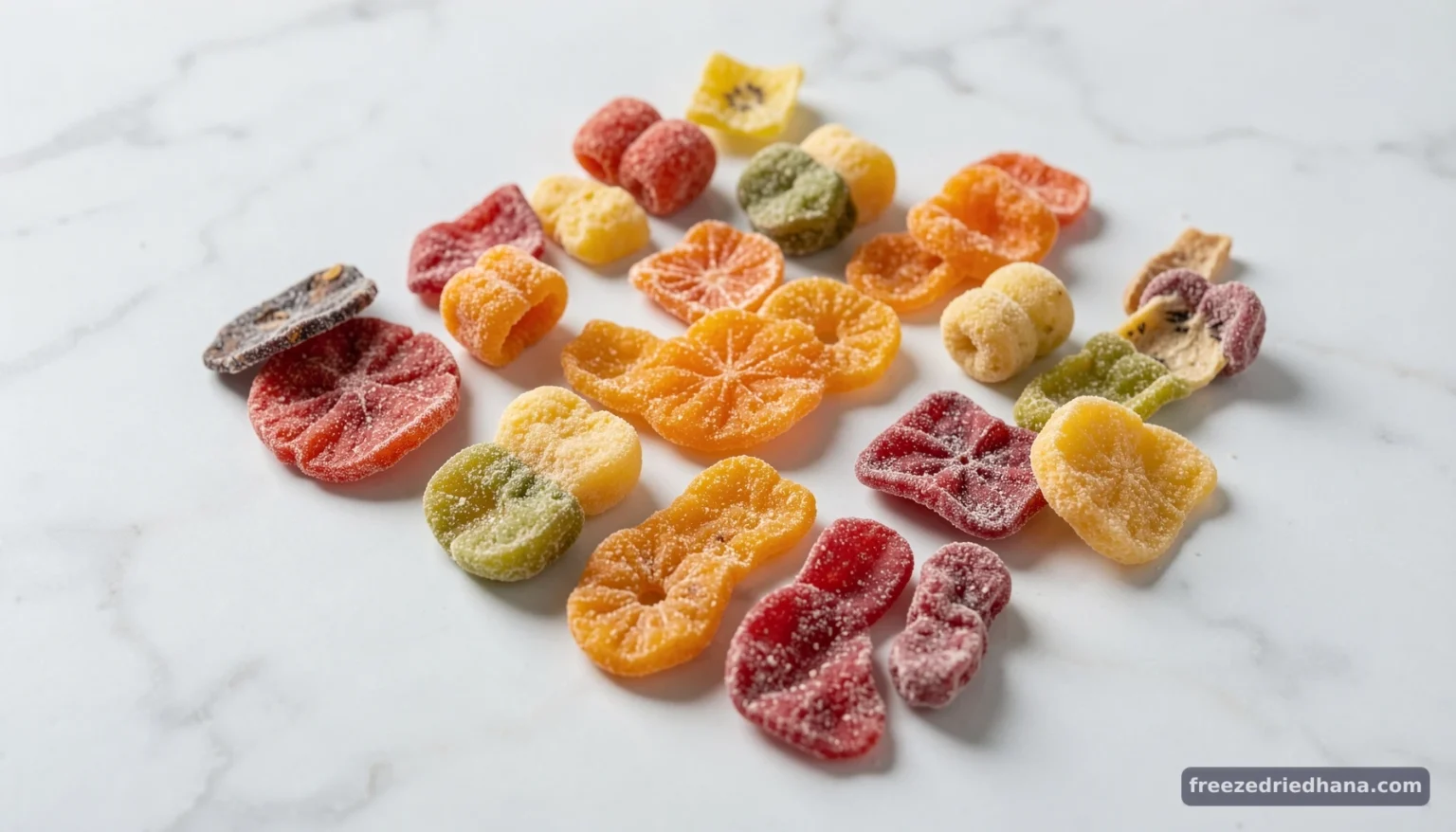
A wholesale freeze dried fruit supplier helps brands and manufacturers source shelf-stable fruit at scale, with export planning built around product specifications, order size, and destination. For buyers following tropical fruit export trends, Freezedriedhana supplies freeze-dried and soft-dried fruits and fruit powders from Vietnam, with FCL and LCL shipping options. Buyers can assess product fit, compare freeze-dried fruit with spray-dried powders, review packaging requirements, food-safety documentation, and shipping terms before confirming a bulk order.
What a Wholesale Freeze-Dried Fruit Supplier Does
A wholesale freeze-dried fruit supplier manufactures or sources fruit products for business buyers and coordinates the specifications and export steps required to move them across borders. Freezedriedhana offers wholesale, OEM, and private-label dried fruit supply from Vietnam, connecting Vietnamese fruit processing with international retail, distribution, and food-manufacturing needs.
From processing to international supply
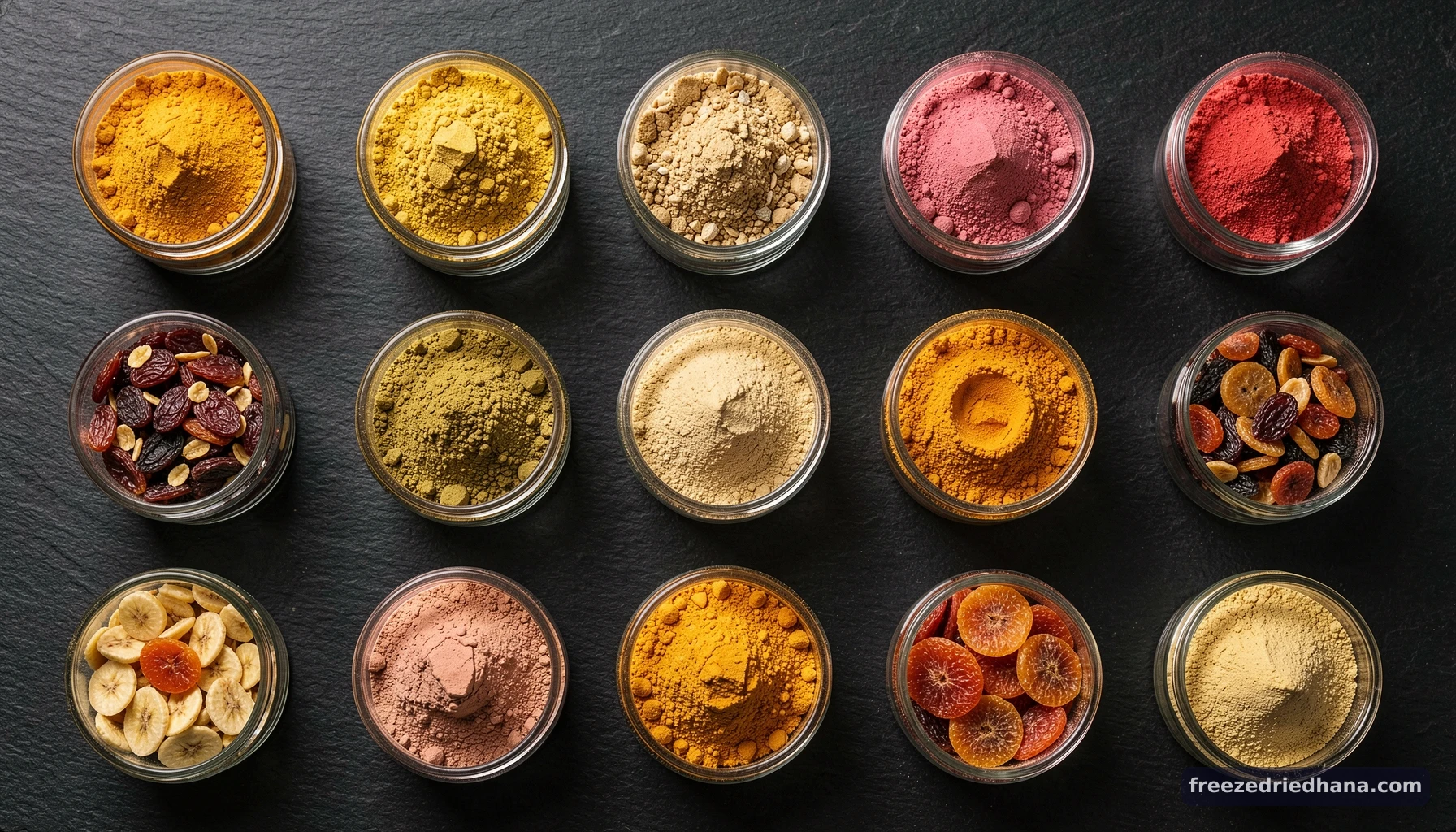
Freezedriedhana specializes in freeze-dried fruits, soft-dried fruits, and fruit powders. These formats serve different commercial purposes: freeze-dried fruit can suit snack products, soft-dried fruit provides a naturally sweet, chewy option, and fruit powders can be used as ingredients in products such as smoothies, supplements, and bakery applications.
The processing method matters when selecting a product. Freeze-drying uses vacuum-based technology and is described by the supplier as retaining 98% of original nutrients and 100% natural flavor. Soft-drying uses heat to create a chewy texture. Cold-drying is used specifically for vegetable powders; it should not be confused with the supplier’s fruit-processing formats.
The supplier lists a 24-month shelf life for its freeze-dried fruits. Buyers should confirm which specific product the stated shelf life applies to, how it is measured, and what storage conditions are required. A shelf-life statement is useful for planning inventory, but it does not replace review of the product specification and shipping conditions for a particular order.
Commercial models, buyers, and use cases
Wholesale purchasing is suitable for buyers ordering bulk product, while OEM and private-label services support businesses that want products made for their own brand. The appropriate model depends on whether the buyer needs an ingredient for manufacturing, a bulk snack product for distribution, or a branded retail line. Packaging formats and customization details should be confirmed during consultation rather than assumed.
Typical buyers include retail brands developing clean-label snack ranges, food and beverage manufacturers using fruit ingredients, and international distributors sourcing Vietnamese agricultural products. Use cases include freeze-dried fruit in snack pouches, soft-dried fruit for granola or bakery supply, and fruit powders for smoothies or supplement formulations.
For procurement context, buyers can review Freezedriedhana’s information for a HACCP freeze-dried fruit exporter for global supply. The product and export conversation should still be specific to the buyer’s destination market, application, volume, and labeling needs.
Comparing Product Formats and Export Specifications
The right supply option depends on how the fruit will be used, the buyer’s order volume, and the import requirements of the destination market. Compare the product format and logistics together: the best ingredient for a recipe is not automatically the best fit for a retail pack or a particular shipment plan.

Product and supply comparison
Use the table as a starting point for an inquiry. It reflects the supplier’s stated product categories and logistics options; it does not imply that every packaging configuration or shipping term is available for every item or destination.
| Supply option | Stated characteristics | Buyer considerations |
|---|---|---|
| Freeze-dried fruit | Vacuum-based freeze-drying; supplier states 98% nutrient retention and 100% natural flavor; 24-month shelf life | Confirm fruit variety, product specification, shelf-life basis, storage requirements, and intended retail or ingredient use |
| Soft-dried fruit | Heat-dried, naturally sweet, chewy texture | Confirm texture, product format, application, and packaging requirements for retail or food service |
| Fruit powders | 100% water-soluble powders, including dragon fruit, for industrial food applications | Request the relevant specification and check suitability for the formulation and process |
| Bulk or private label | Wholesale, OEM, and private-label services are offered | Confirm available pack formats, labeling responsibilities, order volume, and approval process |
| FCL or LCL shipping | Both Full Container Load and Less than Container Load options are supported | Compare order size, destination, freight arrangements, and the shipment’s handling requirements |
Certifications, shipping terms, and packaging questions
Freezedriedhana identifies ISO 22000, HACCP, and FDA registration among its food-safety and export credentials. For a purchase, buyers should request and review the relevant documentation, verify that it applies to the product and facility involved, and check any additional rules imposed by the destination country. A certification or registration does not by itself confirm that a particular product label or shipment meets every local import requirement.
FOB and CIF describe different allocations of cost, responsibility, and risk under international trade terms. In general, FOB is used for sea or inland-waterway transport: the seller’s delivery and risk obligation ends when goods are loaded on board at the named port of shipment. Under CIF, the seller arranges and pays for carriage and insurance to the named destination port, while risk generally transfers when the goods are loaded on board at the port of shipment. The parties should specify the named ports and applicable Incoterms edition in the quotation and contract.
Do not assume either term is available for every order. Ask whether the quotation is FOB, CIF, or another agreed arrangement, and clarify which costs, documents, insurance, and destination charges are included. For packaging, request confirmed options and specifications—such as inner pack, carton, palletization, net and gross weight, dimensions, and material details—before approving production.
A Step-by-Step Guide to Sourcing and Shipping
A reliable procurement process turns a broad product request into a confirmed specification, documented compliance review, and workable export plan. Freezedriedhana’s stated workflow begins with an inquiry through its Request Quote portal and continues through consultation, compliance verification, logistics planning, production, and export.
Steps 1–3: Define the requirement and verify fit
Step 1: Submit a focused inquiry. Use the website’s Request Quote portal to identify the product category, intended application, estimated volume, destination market, and whether the requirement is bulk, OEM, or private label. Include any target pack size or labeling requirements if known. The clearer the initial brief, the easier it is to assess product suitability and the next questions to resolve.
Step 2: Consult on product and packaging. The supplier’s team assesses volume, product specifications, and packaging needs. Describe how the fruit will be used: for example, a retail snack, a yogurt topping, or an ingredient in a beverage or supplement. Ask which varieties and formats are appropriate, what specifications can be supplied, and what packaging configurations are actually available for the order. Confirm whether requested details can be met before treating them as agreed.
Step 3: Verify compliance for the destination. Review the relevant ISO 22000, HACCP, and FDA documentation provided for the supply relationship. Then compare the documentation and product information with your importer obligations and local requirements. Confirm who is responsible for checking product labeling and import documentation; do not rely on a general certification claim as a substitute for destination-specific review.
Steps 4–5: Plan freight, confirm terms, and release production
Step 4: Choose a shipping plan. Freezedriedhana supports FCL and LCL shipments. Discuss order volume, destination, timing, and how the load will be handled to decide which option to quote. FCL and LCL are shipment arrangements, not guarantees of a particular transit time or landed cost. Request a written breakdown of the shipping basis and clarify whether the quotation uses FOB, CIF, or another term.
Step 5: Confirm the specification and proceed to production and export. Before approving the order, align on product, quantity, packaging, labeling, shipping term, named port where applicable, and the documents to be supplied. Keep the final approved specification and quotation together so procurement, quality, and logistics teams work from the same version. Once confirmed, the supplier’s stated process is to manufacture the requested fruit products and dispatch them through international freight.
For a deeper supplier-selection framework, buyers can also consult this guide to choosing a reliable freeze-dried fruit manufacturer. Apply its evaluation principles alongside a shipment-specific review of specifications, documents, and commercial terms.
Protecting Product Integrity: Practical Tips and Pitfalls
Long-haul export planning should connect product requirements, packaging specifications, documentation, and freight terms before production is finalized. Freeze-dried fruit’s stated shelf life can support inventory planning, but buyers still need to confirm storage and handling requirements for their product and shipment.
Keep packaging and shipment requirements explicit
Avoid relying on broad descriptions such as “export packaging” or “bulk pack.” Request the actual packaging specification for the proposed order, including pack materials and configuration, net and gross weights, carton dimensions, pallet details if applicable, and labeling information. Confirm whether the requested packaging is intended for bulk ingredient handling, retail sale, or a later repacking process.
For long-haul transcontinental shipments, ask how the agreed packaging is intended to protect the product during storage and transport. Discuss exposure to moisture, package closure and seal expectations, handling during consolidation for LCL, and any storage conditions specified in the product documentation. These are questions for the supplier and logistics providers to answer for the particular product—not assumptions that can be made from the term “freeze-dried.”
A common pitfall is treating a 24-month shelf-life statement as a promise that every shipment will arrive with the same remaining shelf life. Confirm the shelf-life basis, production and dispatch timing, storage guidance, and how the batch information will be documented. Agree on these points before shipment, especially when distribution or retail planning depends on the remaining shelf life at arrival.
Resolve common procurement and freight problems early
One frequent issue is comparing FOB and CIF quotations as if they include the same costs. Ask for the named port and applicable Incoterms edition, and identify which freight, insurance, handling, and destination charges are included or excluded. Under CIF, clarify the insurance arranged and the relevant coverage details; under FOB, confirm how the buyer will arrange the onward freight and insurance. The parties should document their allocation of responsibilities rather than rely on shorthand.
Another pitfall is selecting LCL solely because the order is smaller. Ask how consolidation, handling, and the shipment schedule affect the plan for the specific cargo, then compare the quoted total and requirements against FCL. Neither option is automatically best; suitability depends on order size, destination, commercial timing, and the agreed logistics arrangement.
Consider a retailer launching a private-label dragon fruit snack. It should confirm product format, retail packaging and label responsibilities, compliance documentation, and order volume before seeking a freight quote. A beverage manufacturer buying water-soluble fruit powder should instead prioritize the ingredient specification and formulation fit. In both cases, written confirmation prevents a use-case assumption from becoming a costly production or import mismatch.
2026 Outlook: Expert Perspective from Freezedried Hana Nguyen
In 2026, international buyers can make stronger sourcing decisions by treating product, compliance, packaging, and freight as one procurement workflow rather than separate handoffs. Freezedried Hana Nguyen’s perspective is grounded in Vietnamese fruit processing and export supply: define requirements early, verify the documents, and confirm commercial details before production and shipment.
Practical benchmarks buyers can use in 2026
There is no single global benchmark that can substitute for an order-specific specification, import review, and freight quote. Instead of relying on unsupported average shipping costs or universal lead times, buyers can use a consistent comparison checklist when evaluating suppliers:
- Product fit: Is the offer freeze-dried fruit, soft-dried fruit, or fruit powder, and does it match the intended application?
- Specification clarity: Are the product details, quantity, packaging, and label requirements documented?
- Food-safety review: Have the relevant ISO 22000, HACCP, and FDA documentation been requested and checked for the proposed supply?
- Freight transparency: Does the quote clearly identify FCL or LCL, shipping term, named port, included charges, and responsibilities?
- Inventory planning: Is the stated 24-month shelf life confirmed for the specific freeze-dried product, with storage guidance and batch details addressed?
- Destination readiness: Have the importer’s market-specific documentation, labeling, and regulatory requirements been reviewed?
This approach gives procurement teams a repeatable basis for comparing quotations without treating a supplier’s general capability as a shipment guarantee. It also helps teams spot missing information while there is still time to resolve it.
A supply-chain perspective from Freezedried Hana Nguyen
Hana Nguyen’s work as a global B2B supply chain strategist focuses on connecting Vietnamese agricultural processing with international buyers. For buyers, that means looking beyond product descriptions to the complete path from inquiry to export: consultation on volume and packaging, compliance-document review, logistics planning, production, and dispatch.
Freezedriedhana serves markets across North America, Europe, and Asia and supports both FCL and LCL shipping. Those capabilities create a basis for international discussions, but the right arrangement must be confirmed for each product, order, and destination. Buyers should request a quote that makes the specifications and shipping assumptions visible, then coordinate procurement, quality, and logistics teams around the same approved details.
The practical takeaway is straightforward: do not finalize a bulk order until the product, packaging, compliance documents, and shipping responsibilities are clear in writing. That discipline is especially valuable for private-label launches, where production choices and freight terms affect both the brand experience and the receiving plan.
FAQ
What should I include in a wholesale fruit inquiry?
Identify the product category, intended use, estimated volume, destination country, and whether you need bulk, OEM, or private-label supply. Include known packaging, labeling, or specification requirements. The supplier’s Request Quote process is the starting point for consultation and a shipment-specific proposal.
Does Freezedriedhana offer FOB or CIF shipping?
The supplier’s stated logistics options include FCL and LCL shipping, but the available Incoterm should be confirmed for the specific order. Ask for the proposed term, named port, applicable Incoterms edition, and a clear breakdown of included costs and responsibilities before accepting a quotation.
How can buyers protect freeze-dried fruit during long-haul export?
Confirm the product’s packaging specification, closure and handling expectations, storage guidance, and shelf-life basis with the supplier. Also clarify shipment arrangements, documentation, and responsibility for freight and insurance. Do not assume that a product format or general export statement guarantees a particular packaging performance.
Which certifications and documents should an importer review?
Freezedriedhana identifies ISO 22000, HACCP, and FDA registration among its credentials. Request the relevant documentation for review and check it against your destination’s import and labeling requirements. The importer should verify that the documents and product information fit the specific product and market.