Tropical fruit export trends: Freeze-Dried Growth

Tropical fruit export trends are shifting toward better traceability and more resilient product formats. In updates dated October 1–2, 2026, Tridge reported price divergence in rambutan linked to new traceability standards, while OEC noted changing trade patterns for HS 0804. For exporters and buyers, the message is practical: freshness alone is not a supply-chain strategy, and a comparison of South American freeze-dried fruit suppliers can help evaluate sourcing options.
1. What the latest tropical fruit export trends signal
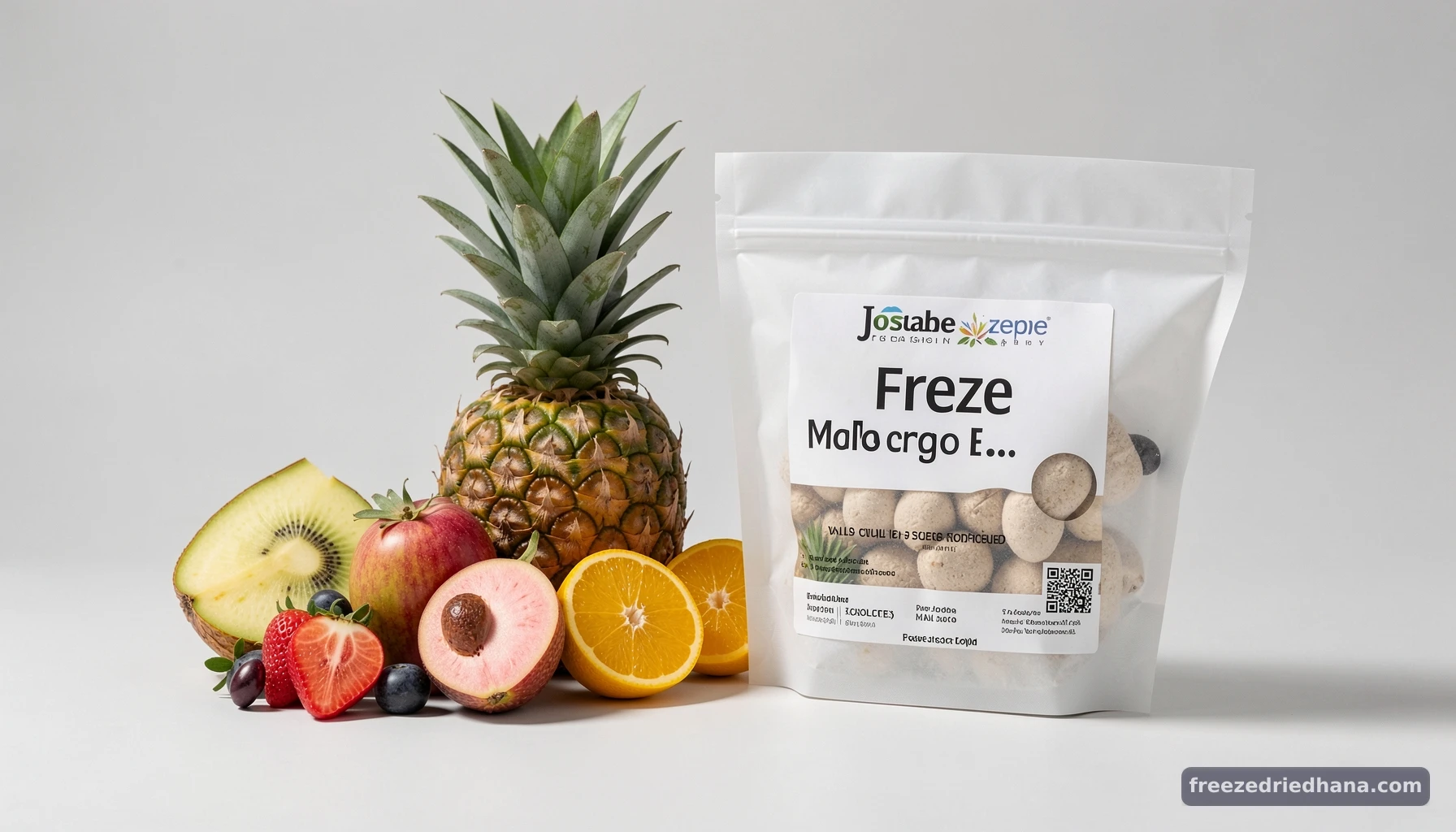
Recent market updates point to a tropical fruit trade where provenance, consistent quality, and logistics increasingly influence commercial viability. The OEC’s October 2, 2026 update on HS 0804 and Tridge’s October 1 rambutan reporting describe pressure points, but do not provide a single market-wide price change or export-volume figure.

Traceability is becoming a market-access and pricing issue
Tridge’s October 1 update describes price differences in rambutan associated with new traceability standards. That distinction matters: traceability is not simply a label or administrative add-on. Buyers need to establish where fruit came from, how it was handled, and whether the supplier’s records support the claims made about it.
When buyer requirements vary, exporters may see different commercial outcomes for products that appear similar at first glance. A shipment with reliable lot identification and complete documentation may be easier to assess and accept than one with gaps in its records. The available update does not quantify a price premium or specify the requirements behind the divergence, so those details should be verified with the buyer and destination-market authorities.
For B2B teams, the practical response is to treat traceability as an operational capability, including when evaluating a freeze-dried fruit manufacturer. Align farm or processor records, lot codes, product specifications, and shipment documents before harvest or production begins—not after a discrepancy appears.
Read trade classifications with care
OEC’s October 2 update concerns HS 0804, a customs category covering several fruit types, including dates, figs, pineapples, avocados, guavas, and mangoes. It is a useful indicator of trade movement across the category, but it is not a complete measure of every tropical fruit or processed-fruit product.
In particular, freeze-dried fruit or soft-dried fruit may be classified differently from fresh fruit, depending on the product and applicable customs rules. Businesses should therefore avoid using an HS 0804 trend as a direct proxy for demand in every processed-fruit segment. Confirm the correct classification with a qualified customs professional.
This distinction improves market analysis: use trade data to identify broad shifts, then combine it with buyer conversations, product-level records, and destination-specific import requirements.
The commercial signal is differentiation, not a guaranteed premium
The rambutan report suggests that traceability expectations can coincide with market price differences. It does not establish that every traceable lot earns more, or that documentation alone creates a premium. Buyers also weigh eating quality, consistency, food safety, delivery reliability, and specification fit.
The same caution applies to niche fruits such as mamey sapote. Tridge identifies the fruit as a specialty opportunity with complex logistics, but niche status is not automatically profitable. Demand may be narrow, and shipping, handling, shelf life, and buyer education can affect the business case.
Exporters should validate the economics shipment by shipment. Before expanding a niche category, confirm target customers, order frequency, acceptable formats, shelf-life expectations, and the landed-cost assumptions used by the buyer.
2. Why resilience is moving beyond fresh fruit
Fresh fruit remains valuable, but its short handling window can expose both sellers and buyers to losses when harvest timing, transport, quality, or market conditions change. Processing can provide another route to market; it does not remove every supply-chain or import risk.
Lessons from the 2025 price and disease pressures
FreshFruitPortal’s January 2, 2026 analysis reflects on challenges in 2025, including lower mango prices and efforts to manage fungal disease in bananas. Those pressures illustrate how agricultural risk can arise from different directions: market supply can affect returns, while crop-health issues can disrupt availability and quality.
The commercial lesson is not that fresh exports should be abandoned. Fresh products can command strong demand and suit customers who value their texture and immediate use. Rather, relying on a single format, crop, or selling window can leave an exporter exposed when conditions turn unfavorable.
A more resilient plan may combine fresh sales with processing options where suitable, supported by realistic production capacity and confirmed customer demand. Processing decisions should be made before a surplus occurs; equipment, specifications, and buyer approval cannot always be arranged at the last minute.
What freeze-drying can—and cannot—solve
Freeze-drying removes water under controlled conditions using freezing and vacuum drying. The method can create a lightweight, shelf-stable product with a different texture and use profile from fresh fruit. Freezedriedhana describes its freeze-dried products as having a 24-month shelf life; buyers should confirm the product-specific shelf-life documentation and storage conditions before relying on that figure.
The format may help manufacturers plan inventory and reduce exposure to the time pressure associated with fresh distribution. It can also support applications such as snacks, inclusions, and ingredients, depending on the fruit and buyer specification.
However, freeze-drying is not an automatic solution to phytosanitary rules. Import treatment and documentation requirements depend on the commodity, processing method, destination, and applicable regulations. A processed product may be subject to different controls from fresh fruit, but exporters must verify requirements with competent authorities and importers rather than assume a barrier has disappeared.
Soft-dried fruit serves a different role
Soft-dried fruit uses heat-drying and typically offers a chewy texture, distinct from the crisp structure commonly associated with freeze-dried fruit. Freezedriedhana lists both formats in its processing capabilities, alongside fruit powders. These are not interchangeable products: each can suit different applications, sensory expectations, and manufacturing needs.
For buyers, the choice starts with the finished use. A crunchy snack or lightweight topping may call for a freeze-dried format; a chewy snack or confectionery inclusion may be better served by soft-dried fruit. Ingredient performance, moisture specifications, packaging, and storage conditions still need to be evaluated.
A format comparison should therefore address both product function and supply-chain fit—not just the drying method. Samples and specification review help buyers assess texture, flavor, handling, and compatibility with their own production process.
| Market signal or format | Reported detail or defining feature | Practical interpretation | Evidence or validation needed |
|---|---|---|---|
| OEC, October 2, 2026 | Update on trade patterns in HS 0804 | Use as a broad trade indicator, not a proxy for every processed fruit | Product-level trade code and destination data |
| Tridge, October 1, 2026 | Rambutan prices diverge alongside new traceability standards | Buyers and exporters should strengthen lot-level records | Buyer requirements, shipment data, and actual transaction terms |
| FreshFruitPortal, January 2, 2026 | Review of 2025 mango price declines and banana fungal-disease challenges | Diversify planning across crops, formats, and selling windows where viable | Crop outlook, quality records, and customer commitments |
| Freeze-dried fruit | Vacuum freeze-drying; Freezedriedhana states a 24-month shelf life for its products | Consider for shelf-stable snacks or ingredients where specifications fit | Product-specific shelf-life evidence, storage conditions, and import rules |
| Soft-dried fruit | Heat-dried, with a naturally sweet, chewy profile | Consider when the target application needs a softer texture | Moisture, texture, packaging, and end-use specifications |
3. Vietnam’s supply-chain opportunity: climate, clean-label, and format choice
Vietnam’s diverse growing conditions can support a varied fruit portfolio, but they do not by themselves guarantee year-round availability or uniform quality. Strong Vietnam tropical fruit supply chain solutions pair crop planning with transparent sourcing, appropriate processing, and buyer-ready documentation.
Microclimates are an opportunity, not a quality guarantee
Regional variation in climate and growing conditions can support different crops and harvest periods. For sourcing teams, this diversity may create options for planning supply across products and seasons. But availability must be confirmed at the farm, region, and product level; a country’s climate profile is not proof that any specific fruit is available year-round.
Nor should nutrition claims be inferred from geography alone. Nutrient content and product quality can vary with cultivar, growing conditions, maturity, handling, and processing. Buyers seeking clean-label tropical fruit ingredients for B2B applications should request product specifications and supporting evidence for claims, rather than relying on broad descriptions of origin.
For procurement teams, the useful question is specific: which fruit, from which supply region, is available in the required form, volume, and period—and what records support its identity and quality?
Clean-label demand requires substantiated claims
Fortune Business Insights’ September 14, 2026 outlook expects the fresh-fruit market to continue growing through 2034, with natural-origin and clean-label demand among the drivers. This is a directional forecast, not a guarantee of performance for every fruit, country, or processed format.
“Clean label” also does not have one universal definition that replaces regulatory or customer requirements. Buyers should define the term in their own specification: for example, which ingredients, processing aids, additives, or claims are acceptable. Suppliers should be able to explain the process and provide documentation appropriate to the agreed product and destination.
Freezedriedhana states that its products are 100% natural and identifies ISO 22000, HACCP, and FDA registration among its credentials. Buyers should verify the scope and validity of relevant certifications or registrations, confirm that they apply to the facility and product in question, and align documentation with their own compliance program.
Choose formats against the application
Format selection should follow the customer’s intended use, not a generic assumption that one technology is always superior. Freeze-dried pieces, soft-dried fruit, and fruit powders differ in texture, handling, and applications. Powder, for example, may be suitable for beverage or food manufacturing where a dispersed ingredient is needed; the relevant performance depends on the product and formulation.
A structured comparison helps prevent mismatched specifications:
- Define the end use. Specify whether the product is a retail snack, topping, inclusion, or manufacturing ingredient.
- Set sensory and technical requirements. Agree on texture, flavor, piece size or powder characteristics, and packaging needs.
- Confirm compliance and documentation. Review the product specification, food-safety documentation, origin records, and destination-market requirements.
- Test a representative sample. Evaluate it in the intended application and under realistic handling conditions.
- Validate supply capacity. Confirm production timing, lot consistency, shipping format, and contingency plans before committing to a launch.
Buyers comparing formats can review freeze-dried and dried fruit product categories as a starting point for product discussions. The specification and destination requirements should still determine the final choice.
4. How B2B buyers can mitigate tropical fruit supply-chain risks
Mitigating tropical fruit supply chain risks means building decisions around evidence, product fit, and verified operating capability. Buyers should assess suppliers and formats before a disruption—not assume that a shelf-stable product or a certification eliminates every risk.
A practical supplier and product review
A disciplined sourcing review can be organized around five checks:
- Traceability: Can the supplier connect product lots to source and production records?
- Food-safety systems: Are the relevant certifications, registrations, and facility details current and applicable?
- Product specification: Are ingredient statements, physical characteristics, and packaging requirements documented?
- Shelf life and storage: Is the stated shelf life supported for the particular product, package, and storage conditions?
- Export readiness: Has the supplier confirmed destination-specific documentation, shipping arrangements, and customs classification?
Ask for evidence that matches the product being purchased. A factory credential does not automatically prove that a particular lot meets every buyer requirement, and an export history does not replace checking current destination rules.
Freezedriedhana presents itself as a Vietnamese processor offering freeze-dried fruit, soft-dried fruit, and powders, with OEM and private-label capabilities. Buyers can explore OEM fruit processing services when assessing whether a product can be developed or processed to a defined brief. Scope, minimum operational requirements, specifications, and documentation should be discussed directly and confirmed in writing.
Balance exposure rather than making a single-format bet
A resilient sourcing plan can consider more than one crop, supplier, or product format, but diversification only helps if the alternatives are qualified and commercially viable. A backup source that cannot meet the specification or delivery window is not a reliable contingency.
Buyers can map their exposure across:
- Crop and origin: Identify concentration in a single harvest region or season.
- Product format: Consider whether a processed alternative can support a use case when fresh supply is constrained.
- Supplier capability: Assess traceability, food-safety controls, capacity, and communication.
- Market channel: Match the format to a real customer application rather than speculative demand.
- Regulatory pathway: Confirm requirements for each product and destination before purchasing.
Processing can improve planning flexibility by changing storage and distribution characteristics, but it adds its own considerations: product qualification, packaging, inventory planning, and customer acceptance. The goal is not maximum processing; it is an appropriate portfolio that aligns with demand and risk tolerance.
What to do next: prepare before the next disruption
The next steps differ by role. Importers should review supplier evidence, product specifications, and the regulatory path for each format. Exporters should strengthen traceability and document controls, then identify products for which buyers have confirmed demand. Product developers should test representative samples and validate them in the intended application.
Use the following decision sequence:
- Prepare if a supply gap would materially affect your operation: identify qualified alternatives and document approval criteria.
- Pilot if demand is promising but unproven: test samples, application performance, and buyer acceptance before scaling.
- Proceed when specifications, compliance, capacity, and commercial assumptions are confirmed.
- Reassess when traceability requirements, crop conditions, or customer needs change.
The broader trade outlook supports attention to resilient sourcing, but it does not justify speculative purchasing. Freezedriedhana’s stated capabilities may be relevant to buyers evaluating Vietnamese processed fruit; the practical next step is a technical discussion grounded in product requirements, not an assumption that one supplier or process suits every use case.
5. What to watch in tropical fruit export trends through 2034
The strongest signal is a gradual shift toward sourcing that can demonstrate origin, quality controls, and fit with the buyer’s intended use. Forecasts indicate continued interest in fresh fruit, while processing gives some businesses additional options for managing product and logistics constraints.
Interpret forecasts as direction, not shipment commitments
Fortune Business Insights’ September 14, 2026 forecast points to continued growth in the fresh-fruit market through 2034 and identifies clean-label and natural-origin demand as drivers. It is useful context for long-range planning, but a market forecast cannot establish demand for a particular Vietnamese fruit, processed format, or buyer segment.
Fruitnet’s October 13, 2025 reporting on Asian fruit trade growth provides additional regional context. Together, these sources support monitoring the region’s role in fruit commerce, while leaving product-level opportunity to be validated through current buyer demand, trade data, and supplier capability.
Watch traceability, niche logistics, and processing demand
Three areas merit ongoing attention: evolving traceability expectations, the cost and complexity of niche-fruit logistics, and buyer interest in clean-label ingredients. Tridge’s rambutan update is a reminder that traceability can intersect with market access and price differentiation. Its mamey sapote observation highlights the need to scrutinize logistics before treating a specialty fruit as a high-margin opportunity.
Meanwhile, the 2025 challenges summarized by FreshFruitPortal help explain why exporters assess processing as one part of risk management. Freeze-dried fruit export advantages may include a longer stated shelf life and a format suited to selected snack or ingredient applications. Those advantages are product-specific and should be balanced against processing needs, customer qualification, and regulatory requirements.
Build a sourcing decision around proof
For procurement and export teams, the most useful response to these trends is a repeatable decision system: track market signals, verify supplier records, compare product formats against use cases, and confirm destination requirements before purchase or production.
A buyer can start with a sample and a specification review. An exporter can begin by mapping traceability from source through processing and shipment. A product developer can check whether freeze-dried, soft-dried, or powdered fruit fits the recipe and end-user expectations.
Hana Nguyen’s perspective at Freezedriedhana is that resilience depends on connecting Vietnam’s agricultural supply with transparent, technically suitable processing and dependable export planning. That is a strategic framework—not a promise of uninterrupted supply or immunity from volatility. The strongest partnerships are built on clear specifications, verified evidence, and realistic contingency plans.
FAQ
What are the most important tropical fruit export trends in 2026?
The latest signals include stronger buyer attention to traceability, continued interest in natural-origin and clean-label products, and increased consideration of processed formats alongside fresh fruit. Tridge’s October 1, 2026 rambutan update links price divergence with new traceability standards, while OEC’s October 2 HS 0804 update points to shifting trade patterns. These reports do not establish a universal price change or prove that every fruit category is growing at the same rate.
Does freeze-dried fruit eliminate phytosanitary import barriers?
No. Processing can change a product’s characteristics and may affect which import controls apply, but it does not automatically remove phytosanitary or food-safety requirements. Rules depend on the fruit, processing method, destination, documentation, and applicable regulations. Importers and exporters should confirm the requirements with competent authorities and the buyer before shipment. They should also verify the correct customs classification rather than assume fresh-fruit trade codes apply to a processed product.
How should a B2B buyer choose between freeze-dried and soft-dried fruit?
Start with the intended application and required texture. Freeze-dried fruit is typically selected when a light, crisp format suits the product; soft-dried fruit offers a chewier texture. Then assess flavor, ingredient requirements, packaging, shelf-life evidence, storage conditions, and performance in the final formulation. Request a representative sample and product specification, and confirm that documentation and import requirements fit the destination market before approving a supplier or production run.
What should importers verify before sourcing Vietnamese processed fruit?
Importers should review lot traceability, product specifications, food-safety credentials, facility and product documentation, shelf-life support, storage instructions, and destination-specific import requirements. They should verify the scope and validity of certifications or registrations rather than treating them as blanket guarantees. It is also important to confirm production capacity, packaging, shipment arrangements, and customs classification. A sample evaluation and written specification help align the supplier, buyer, and end-use application before a larger order.