Vietnam’s Fruit Strengths: The Synergy of Nature and Technology
Vietnam’s Fruit Strengths – Where Tropical Abundance Meets Advanced Preservation
From durian to dragon fruit, Vietnam’s $8.5 billion fruit industry is scaling new heights. Hana Nguyen bridges nature’s bounty with freeze-dried, soft-dried and cold-dried technologies to deliver premium, clean-label ingredients for global B2B buyers.
A Billion-Dollar Harvest: Vietnam’s Fruit Export Surge
Vietnam’s fruit and vegetable sector has shattered records, reaching an estimated $8.5 billion in export revenue in 2025** – a year‑on‑year increase of nearly 20%. With sustained growth, the industry is on track to hit the **$10 billion milestone in 2026. Key commodities such as durian, dragon fruit, banana, mango, jackfruit and pomelo are now grown under official planting‑area codes and traceability systems, enhancing their credibility in demanding international markets.
This remarkable rise reflects more than just favourable weather. Vietnam’s fruit sector has moved beyond seasonal surges to form a clear upward trend, driven by quality improvement, stricter residue control and better compliance with global standards. For B2B buyers, this signals a stable, transparent and increasingly sophisticated supply chain – ideal for long‑term sourcing partnerships.
Nature’s Bounty: Vietnam’s Tropical Fruit Basket
Vietnam’s geography and climate create a year‑round tropical fruit basket unmatched in diversity. The Mekong Delta, Central Highlands and southeastern provinces produce an extensive range of premium fruits that are now recognised worldwide.
- Durian: The “king of fruits” reached approximately $4 billion in export value in 2025**, accounting for nearly half of Vietnam’s total fruit and vegetable export turnover. China remains the dominant market, with durian exports to China totalling **884,590 tonnes worth $3.24 billion in the first 11 months of 2025 – a 22.8% increase in volume from the previous year. Vietnam has also expanded official durian access to the US, Japan and the EU, opening fresh avenues for premium processed durian products.
- Dragon Fruit: Once Vietnam’s leading fruit export (earning $1.3 billion in 2018), dragon fruit has surged back, reaching **$93.8 million in the first two months of 2025**, accounting for 14.3% of total fruit and vegetable export value. Vietnamese varieties now account for 90% of China’s imported dragon fruit, and nearly 10% of US dragon fruit imports also come from Vietnam. With its vibrant appearance and natural health appeal, dragon fruit is a prime candidate for value‑added freeze‑dried and powder formats.
- Banana: Often called the “rising star” for the billion‑dollar club, Vietnamese bananas are gaining momentum. Exports to China reached **$232 million in the first nine months of 2025**, up 16% year‑on‑year. With year‑round production and proximity to major markets, banana export growth potential is immense – the Vietnam Fruit and Vegetable Association forecasts it could soon surpass $1 billion annually.
- Mango: Vietnam’s mango sector continues to expand, with a goal of 650 million USD in export turnover by 2030 from 1.5 million tonnes of annual output. In Q1 2025, Vietnam secured a commanding 97% share of China’s mango imports, exporting 40,700 tonnes worth $28 million – a 145‑fold increase year‑on‑year. Popular varieties like Cát Hoà Lộc and Cát Chu are equally suited for fresh consumption and further processing into dried slices, cubes or powder.
- Jackfruit & Pomelo: Vietnam and China recently signed a protocol for official fresh jackfruit exports, marking the 11th Vietnamese agricultural product recognised by China for official trade. Pomelo, meanwhile, is already exported to 14 markets including the US, South Korea and New Zealand, with a newly signed protocol for Australia.
Together, these fruits form the backbone of a multi‑billion‑dollar industry. But raw fruit alone is only half the story. The real opportunity lies in preservation.
Bridging Nature and Technology: Hana Nguyen’s Drying Innovations
Fresh fruit is seasonal. It spoils. It is heavy to ship and requires a cold chain. Hana Nguyen was founded to solve this problem: to take Vietnam’s exceptional tropical fruits and transform them into shelf‑stable, clean‑label, high‑value ingredients that global B2B buyers can rely on all year round.
Drawing on advanced drying technologies, Hana Nguyen offers three distinct product lines, each tailored to different industrial applications.
Freeze Drying (Lyophilisation) – Preserving >95% of Nutrients
Freeze drying is the gold standard for fruit preservation. The fruit is first frozen to -40°C and then placed in a vacuum chamber, where the frozen water sublimates directly from ice to vapour without passing through a liquid phase.
The result is a product that:
- Retains >95% of original nutrients, colour, flavour and shape
- Has an ultra‑low moisture content of <4%, extending shelf life to 24 months without preservatives or cold chain logistics
- Is lightweight (up to 90% lighter than fresh), drastically reducing shipping costs
- Rehydrates instantly, making it highly versatile for food manufacturers
At Hana Nguyen, freeze drying is applied to premium whole‑fruit segments and slices – durian, mango, dragon fruit, strawberry, jackfruit, longan, lychee, rambutan, mangosteen and more. The result is a crispy, melt‑in‑the‑mouth texture that consumers love.
Soft Drying (Low‑Temperature Heat‑Pump Drying) – Chewy, Colourful and Clean Label
For soft‑dried fruits, Hana Nguyen employs a closed‑loop low‑temperature heat‑pump system that operates at 55‑65°C, far lower than conventional hot‑air dryers. This gentle process:
- Preserves the natural vibrant colours of fruits such as mango, pineapple, guava, dragon fruit and passion fruit
- Creates a chewy, pliable texture with controlled moisture (15‑18%) and water activity (<0.65)
- Avoids caramelisation and burnt flavours
- Allows for clean‑label options: no added sugar, no SO₂, no preservatives
While some fruits (such as banana and coconut) are traditionally dried with standard hot air, Hana Nguyen’s soft‑dried range prioritises cold‑drying technology wherever possible, offering buyers a premium “clean‑label” alternative to conventional sugar‑soaked or sulphited dried fruits.
Cold Dried Powders – Natural Colours and Functional Ingredients
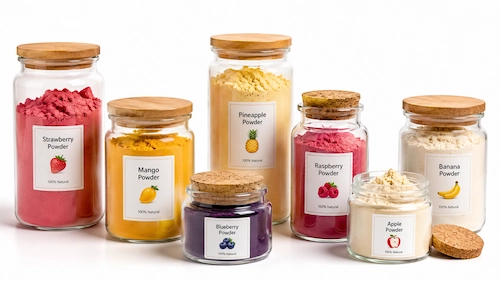
For powders, Hana Nguyen uses cold drying (low‑temperature air drying) to gently remove moisture from vegetable and fruit raw materials before fine milling. This approach:
- Preserves the intrinsic colour (beetroot red, carrot orange, purple yam violet) without artificial additives
- Retains vitamins, minerals and bioactive compounds far better than high‑heat milling
- Produces fine powders with customisable mesh sizes (60‑200) suitable for beverages, bakery, dairy, confectionery and natural food colouring
Hana Nguyen’s cold‑dried powder range includes beetroot, carrot, purple yam (ube), purple sweet potato, whole green banana and peeled green banana – each offering natural functionality and clean‑label appeal.
Why B2B Buyers Should Partner with Hana Nguyen
Vietnam’s fruit industry is thriving, but raw commodity exports alone cannot capture the full value. Processed formats – freeze‑dried pieces, soft‑dried slices and functional powders – offer global buyers superior advantages:
- Year‑round supply consistency – No more seasonal gaps or price spikes
- Extended shelf life (12‑24 months) without preservatives or cold chain
- Greatly reduced logistics costs (container weight and volume)
- Clean‑label, natural ingredients meeting EU, US and global standards
- Versatile forms – whole pieces, diced, powder – for multiple industrial applications
Hana Nguyen is a direct manufacturer based in Ho Chi Minh City, Vietnam, with a US representative office in Valencia, California. The facility holds HACCP, FSSC 22000 and FDA registration, and every batch is accompanied by a Certificate of Analysis (COA) covering moisture, water activity, microbiology and SO₂ content.
Buyers can also leverage Hana Nguyen’s R&D and OEM / private label services to develop custom blends, specific cut sizes, retail‑ready packaging and branded consumer formats – all from one reliable source.
Frequently Asked Questions (B2B)
- What is the minimum order quantity (MOQ) for wholesale freeze‑dried fruit from Hana Nguyen?
One 20ft container (≈5‑8 tons depending on the product). Trial orders of 500‑1,000 kg are available at a higher per‑kg rate. - Can I receive a free sample before placing a container order?
Yes. We provide a free 100‑200g sample (buyer pays international shipping). The sample is produced using the same process as bulk orders and includes a preliminary COA. - How long does shipping take from Vietnam to the USA?
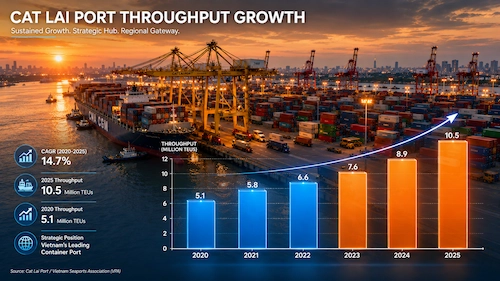
Production lead time: 7‑10 days. Sea freight from Cat Lai Port, Ho Chi Minh City, to the US West Coast: 18‑22 days. Total estimated arrival: 45‑60 days (including customs clearance). - Do your products contain added sugar or SO₂?
For freeze‑dried products and cold‑dried powders: no added sugar, no SO₂, no preservatives. For certain soft‑dried products, a traditional 5% sugar version is available, but a no‑sugar option can be supplied on request. - Can you customise cut size, mesh size or blending of multiple fruits?
Absolutely. We offer custom slices (4‑8mm), cubes (10x10mm, 12x12mm), powder (60‑200 mesh) and bespoke fruit blends. Mixed containers combining several fruits are also available. - What payment terms do you accept?
Standard terms: 30% deposit T/T, 70% against copy of Bill of Lading. For long‑term contracts (≥6 months), we accept L/C at sight. - Is the product organic certified?
Currently, Hana Nguyen is notcertified organic. Our products are conventional, grown under Good Agricultural Practices (GAP), and comply with US and EU pesticide residue limits. - Can you mix different freeze‑dried or soft‑dried fruits in one container?
Yes. Our mixed container service allows you to combine multiple fruit types – for example, freeze‑dried mango, banana, dragon fruit and jackfruit – all in one 20ft or 40ft container. Each fruit is packed in separate, labelled cartons.