Global Demand for Vietnam’s Freeze-Dried & Dried Fruits – A B2B Market Outlook
Vietnam’s Fruit Export Boom – A Record-Breaking Year
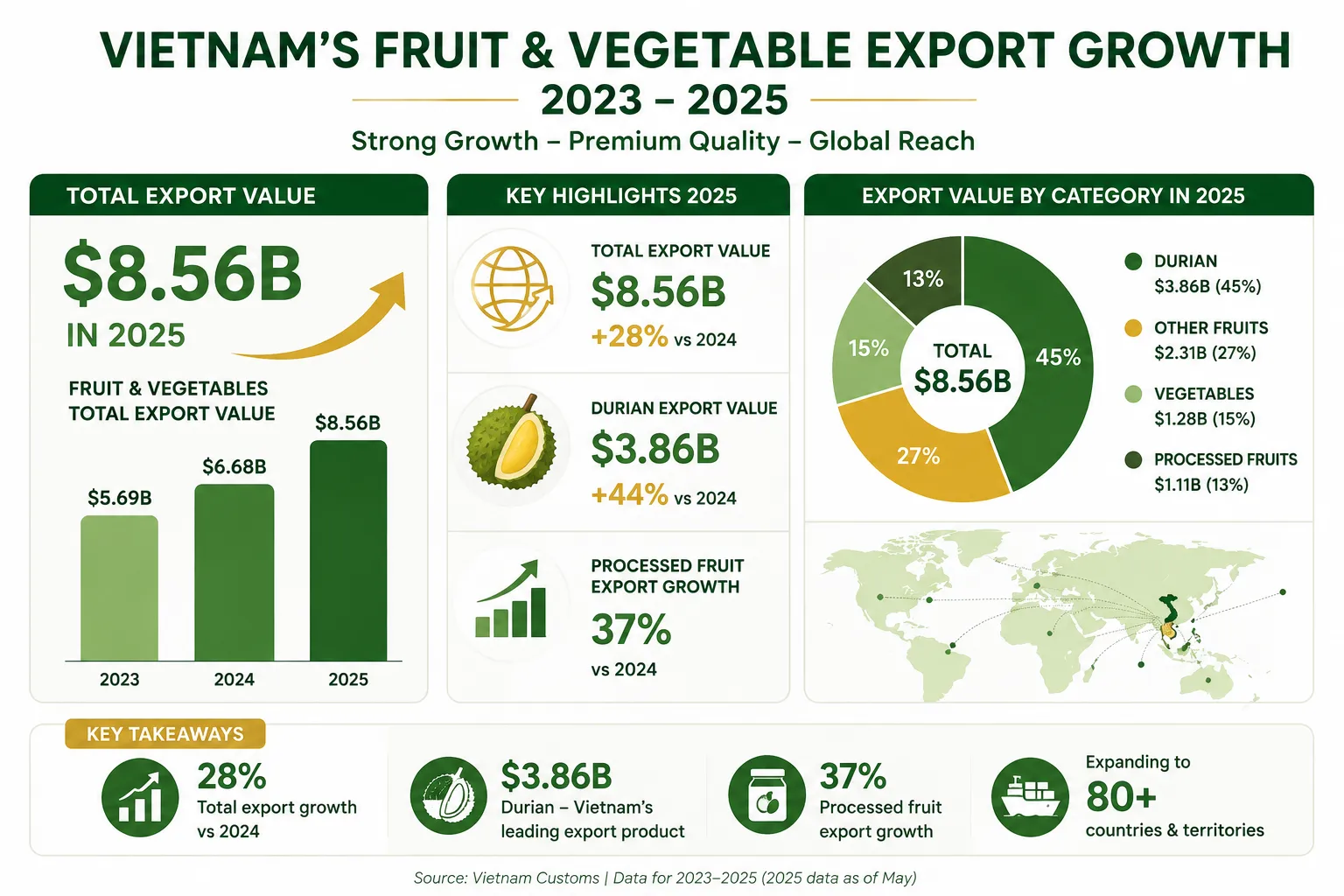
Vietnam’s fruit and vegetable sector closed 2025 with a historic achievement: **export turnover reached $8.562 billion**, a **20% increase** compared to 2024 and significantly higher than the initial target of $8 billion. This marks the first time the industry has surpassed the $8 billion milestone, affirming Vietnam’s increasingly prominent role in the global tropical fruit supply chain.
The momentum carried strongly through the year. In the first 10 months alone, fruit and vegetable exports reached $7.09 billion**, up **15.1%** year-on-year. By the end of November, the figure had climbed to **$7.75 billion, a 17.3% increase. December 2025 alone contributed $794 million, a 50% jump compared to December 2024.
This growth is not just about volume – it reflects a fundamental shift toward higher-value processed products. Processed fruits grew by 37% in 2025, reaching nearly $1.19 billion in the first eight months, while fresh fruit exports slowed. For B2B buyers, this signals a clear opportunity: Vietnam is moving beyond raw commodity exports and building a sophisticated, value-added processing industry.
Durian: The Crown Jewel of Vietnam’s Fruit Exports
Durian continues to dominate Vietnam’s fruit export landscape. In 2025, durian exports are expected to reach approximately $3.86 billion, accounting for over 45% of total fruit and vegetable export value. This is a remarkable achievement for a single fruit category.
The growth extends beyond fresh durian. In the first six months of 2025, Vietnam exported 14,282 tons of frozen durian across 388 shipments – a threefold increase compared to the same period in 2024. Processed durian exports – including freeze-dried and IQF formats – are helping Vietnamese producers reduce reliance on the Chinese market and extend product shelf life. This diversification is critical for long-term, sustainable growth.
Other Fruits on the Rise
While durian leads the pack, other fruits are also posting impressive numbers:
-
Coconut: For the first time, coconut exports surpassed dragon fruit, reaching approximately $534 million – a 37% increase year-on-year.
-
Dragon Fruit: Maintained strong performance with over $525 million in exports, holding third place despite a slight 1.5% decline.
-
Mango: Recorded $409 million, up 10.4% year-on-year.
-
Banana: Reached $405 million, a 6.6% increase.
-
Pistachio: Surged 72.3% to over $466 million.
Passion fruit also emerged as a standout performer, accounting for approximately 25% of Vietnam’s exports to the EU market. This diversity of fruit types – from mainstream to specialty – gives B2B buyers a wide range of sourcing options throughout the year.
The Global Market – A Billion‑Dollar Opportunity for Dried Fruits
The global dried fruit and vegetable market is expanding rapidly. According to Future Market Insights, the market will grow from $88.2 billion in 2025 to $192.2 billion by 2035, with an annual growth rate of 8.1%. This growth is fueled by four powerful drivers:
-
Shift toward plant-based eating – Consumers are adopting more plant-forward diets, increasing demand for fruit-based snacks and ingredients.
-
Health and wellness lifestyles – Dried fruits are perceived as nutrient-dense, natural alternatives to processed snacks.
-
Busy consumers demanding convenient, on‑the‑go options – Portability is a key purchasing factor.
-
Eco‑friendly choices that reduce food waste – Dried fruits have extended shelf life, reducing spoilage and waste.
Within this broader market, the freeze‑dried fruits and vegetables segment is growing even faster. The market was valued at $40.32 billion in 2025** and is projected to reach **$62.59 billion by 2032, at a CAGR of 6.48%. The freeze‑dried fruit market alone is projected at $8.81 billion in 2025**, expected to reach **$14.06 billion by 2033 (CAGR 6.01%).
Key Consumer Trends Driving Demand
Clean label is no longer a premium – it is the baseline. American consumers increasingly prioritize products with:
-
No added sugar
-
No preservatives
-
No artificial colors or flavors
-
Transparent, recognizable ingredients
Vietnam’s processed fruits fit perfectly into this shift. On Amazon, sales of Vietnamese fruit snacks grew more than 550% from 2021–2024, while natural dried fruit increased over 250%. Buyers are voting with their wallets – they want authentic fruit flavor in a convenient, shelf-stable format.
Vietnam’s Processed Fruit Revolution
The shift from fresh to processed fruit exports is not just a trend – it is a strategic transformation of Vietnam’s agricultural value chain. For many years, Vietnam’s exports relied heavily on fresh fruit, which is highly seasonal and vulnerable to market shifts. Processed fruits offer a more stable, higher-value engine for long-term export growth.
This transformation is driven by several factors:
1. Abundant tropical fruit supply
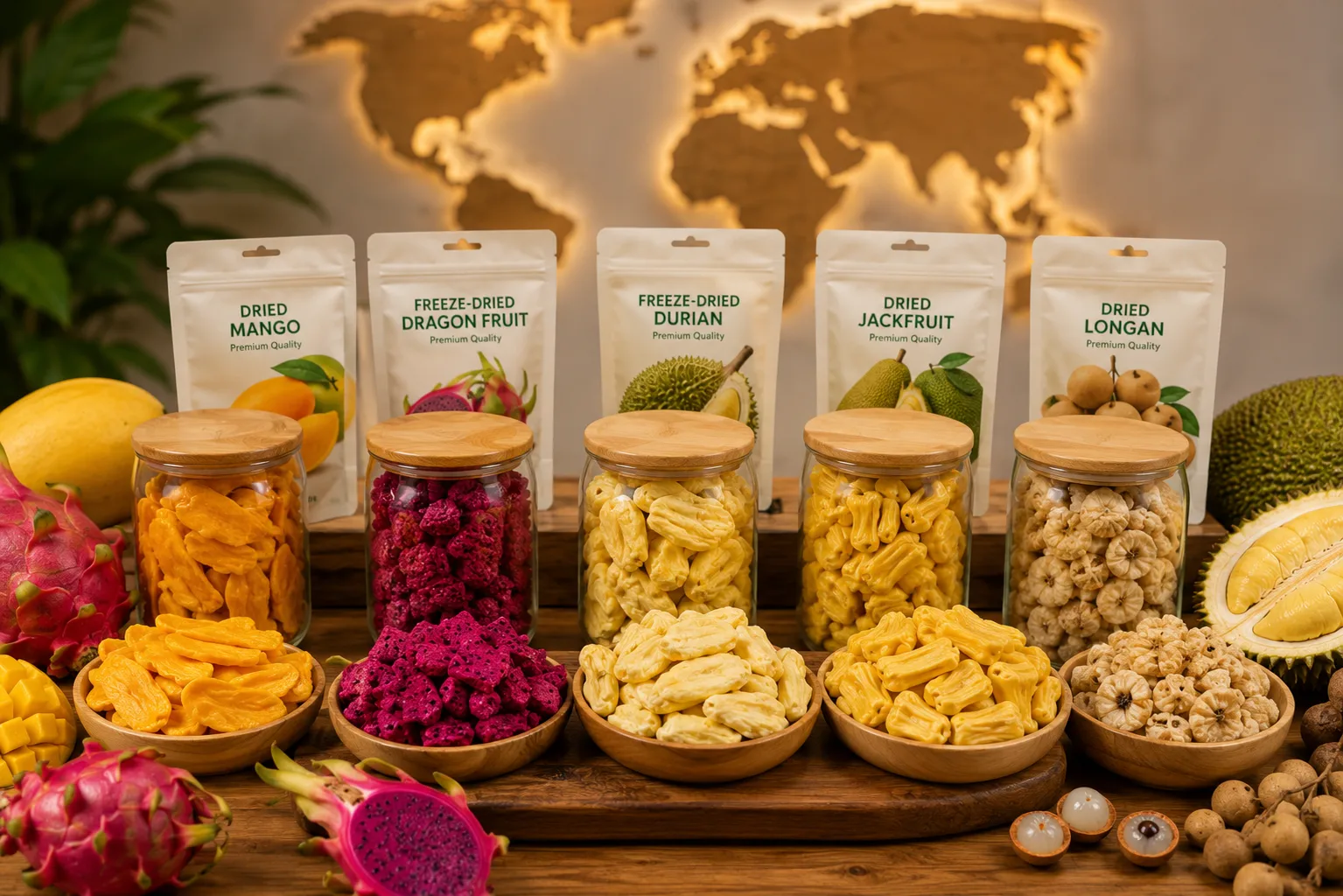
Vietnam produces a year-round bounty of tropical fruits – mango, dragon fruit, durian, jackfruit, longan, lychee, rambutan, mangosteen, sapodilla, and more. This diversity allows manufacturers to offer a wide product range and maintain supply continuity.
2. Advanced drying technologies
Vietnamese manufacturers are adopting modern drying technologies:
-
Freeze drying (lyophilization): Preserves >95% of nutrients, color, and shape; ideal for premium snack and ingredient applications.
-
Soft drying (cold drying): Maintains vibrant colors and chewy texture without caramelization; perfect for clean-label fruit snacks.
-
Cold drying: Retains natural colors and bioactive compounds for powders and functional ingredients.
3. International certifications
Leading exporters like Hana Nguyen have obtained HACCP, FSSC 22000, ISO 22000:2018, and FDA registration – enabling them to meet the strict food safety requirements of the US, EU, Japan, and other demanding markets.
4. EVFTA tariff advantages
The EU-Vietnam Free Trade Agreement (EVFTA) has significantly boosted processed fruit exports. Export turnover in the first half of 2025 alone hit $233.2 million, up 44.1% year-on-year. Processed fruits have become Vietnam’s competitive edge in the EU market.
The US Market – Vietnam’s Fastest‑Growing Dried Fruit Destination
The United States is Vietnam’s second-largest fruit and vegetable market after China, accounting for 6.6% of total export value. While China remains the dominant buyer (64% of total exports, reaching $5.5 billion in 2025), the US market is growing at a much faster clip.
Key US market statistics:
-
US market value (2025): $547 million, a 52% increase compared to 2024.
-
First 10 months of 2025: $454.6 million, achieving 126.1% of full-year 2024 turnover.
-
October 2025 alone: $47.8 million, up 46.9% year-on-year.
-
Vietnam’s market share in dried fruit imports: Growing rapidly, with a 66.9% year-on-year increase in dried fruit exports to the US in 2025.
The US remains a high-potential market, especially for premium and dried fruit products. The US dry fruits market is projected to grow from $10.01 billion in 2025 to $13.95 billion by 2031 (CAGR 5.69%).
Why US buyers are turning to Vietnam
-
Competitive pricing: Vietnamese dried fruits offer attractive FOB pricing compared to competitors.
-
GSP tariff benefits: Many Vietnamese products qualify for 0% tariff under the US Generalized System of Preferences (GSP) – a significant cost advantage.
-
Superior raw material quality: Vietnamese tropical fruits are known for their distinct flavor profiles and high brix levels.
-
Year-round supply: Multi-region sourcing and cold storage ensure consistent availability.
Hana Nguyen – Your Gateway to Vietnam’s Dried Fruit Export Growth
Hana Nguyen is a Vietnamese manufacturer and exporter of premium freeze‑dried, soft‑dried, and cold‑dried fruit products, serving B2B buyers worldwide. We have built our business on three pillars that align directly with global market trends:
1. Clean label, no additives
Our freeze‑dried and cold‑dried products contain no added sugar, no SO₂, and no preservatives. Soft‑dried products are available in both sugar-free and traditional versions. This clean-label positioning meets the demands of US and EU retailers and consumers.
2. Advanced drying technologies
We operate three complementary drying platforms:
-
Freeze drying: Preserves >95% of nutrients, color, and shape.
-
Soft drying (cold drying): Produces chewy, vibrant fruit with natural color.
-
Cold dried powders: Gently dried and milled for natural food colors and functional ingredients.
3. Direct farm partnerships and traceability
We source directly from farming cooperatives across the Mekong Delta and Central Highlands, ensuring:
-
Consistent quality
-
Full traceability from farm to finished product
-
Compliance with US and EU pesticide residue limits
4. International certifications
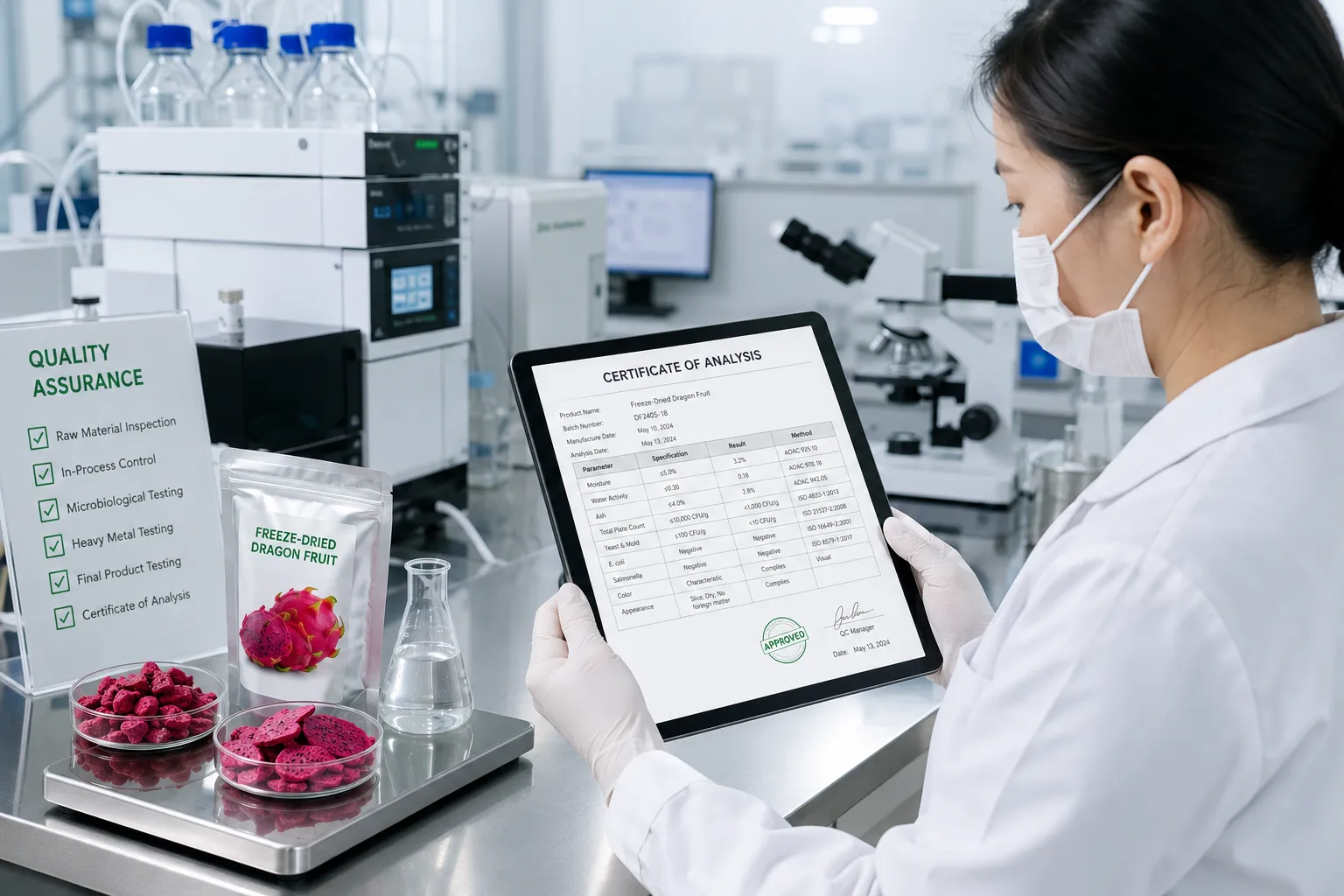
Our facility is HACCP, FSSC 22000, and FDA registered. Every shipment includes a full Certificate of Analysis (COA) covering moisture, water activity, microbiology, and SO₂‑free status.
Frequently Asked Questions (B2B)
1. Why is global demand for Vietnam’s dried fruits increasing?
The global dried fruit market is growing at 8.1% annually, driven by clean-label, plant-based, and convenient snacking trends. Vietnam offers premium tropical fruits with competitive pricing and year-round supply.
2. What is the fastest‑growing segment in Vietnam’s fruit exports?
Processed fruits – including freeze‑dried, soft‑dried, and cold‑dried products – grew by 37% in 2025, far outpacing fresh fruit exports.
3. Which markets are driving demand for Vietnamese dried fruits?
The US (52% growth in 2025), EU (EVFTA-driven growth), Japan, Korea, and Australia are all expanding their imports of Vietnamese dried fruits.
4. What are the key quality requirements for exporting to the US?
US buyers require FDA registration, clean-label ingredients (no SO₂, no added sugar), pesticide residue compliance, and full traceability documentation (COA).
5. How can I start sourcing from Hana Nguyen?
Contact our export team for a free sample, technical datasheet, and FOB container pricing.