Seasonal Guide: Vietnam Fruits for Freeze‑Drying & Soft‑Drying
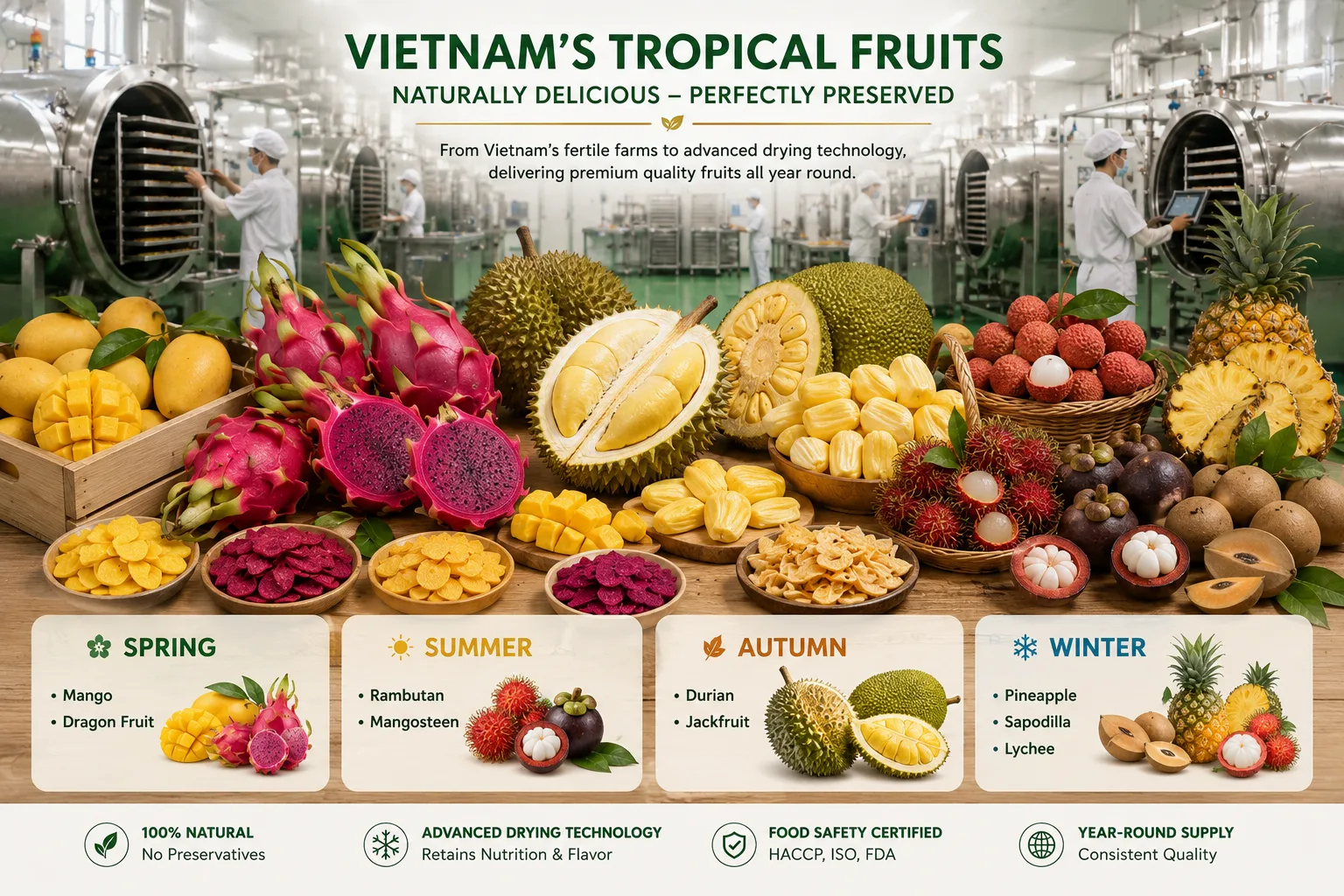
Seasonal Guide: Vietnam Fruits for Freeze‑Drying & Soft‑Drying
Source smarter, not harder. Learn exactly when Vietnam’s top tropical fruits are at their peak – and how to match each season to the right drying technology for premium B2B results.
📌 Quick Summary (TL;DR)
- Why seasonality matters: Fruit harvested at peak ripeness delivers superior flavor, color, texture, and nutritional value – directly affecting your final dried product.
- Key takeaway: Vietnam produces tropical fruit year‑round, but each fruit has a distinct peak season when quality and availability are at their best.
- For B2B buyers: Understanding these seasons helps you secure better quality, stable supply, and optimized costs.
- What you’ll learn: When to buy each fruit, why that timing matters, which drying technology to use, how to assess quality, common sourcing mistakes, and how to plan year‑round imports.
Why This Matters for Importers
If you’re sourcing freeze‑dried or soft‑dried fruit from Vietnam, your raw material quality is the single biggest factor determining your final product’s success. Here’s why:
- Flavor and sweetness (Brix): Fruit harvested at peak ripeness has the highest natural sugar content, reducing or eliminating the need for added sugar. For freeze‑dried fruits, this means a more intense, authentic taste. For soft‑dried fruits, it contributes to a balanced, chewy texture.
- Color and appearance: Properly sourced seasonal fruit retains its natural color, which is critical for both freeze‑dried and soft‑dried products. Freeze‑drying preserves color better than any other method, but starting with vibrant, fresh fruit ensures the best results.
- Texture and structure: Fruit that is too ripe can become mushy during processing; fruit that is under‑ripe may result in a hard or leathery texture. Seasonal fruit provides the ideal balance of firmness and moisture.
- Nutritional value: Research shows that freeze‑drying retains over 95% of the original nutrients, but only if the raw material is of high quality. Seasonal fruit is richer in vitamins, antioxidants, and bioactive compounds.
Interactive Seasonal Buying Matrix
Use this matrix to plan your purchases. Best Month = peak quality. Price = relative cost (Low/Medium/High). Quality = expected quality rating. Availability = supply certainty. Lead Time = typical time from order to shipment.
| Fruit | Best Month | Price | Quality | Availability | Lead Time |
|---|---|---|---|---|---|
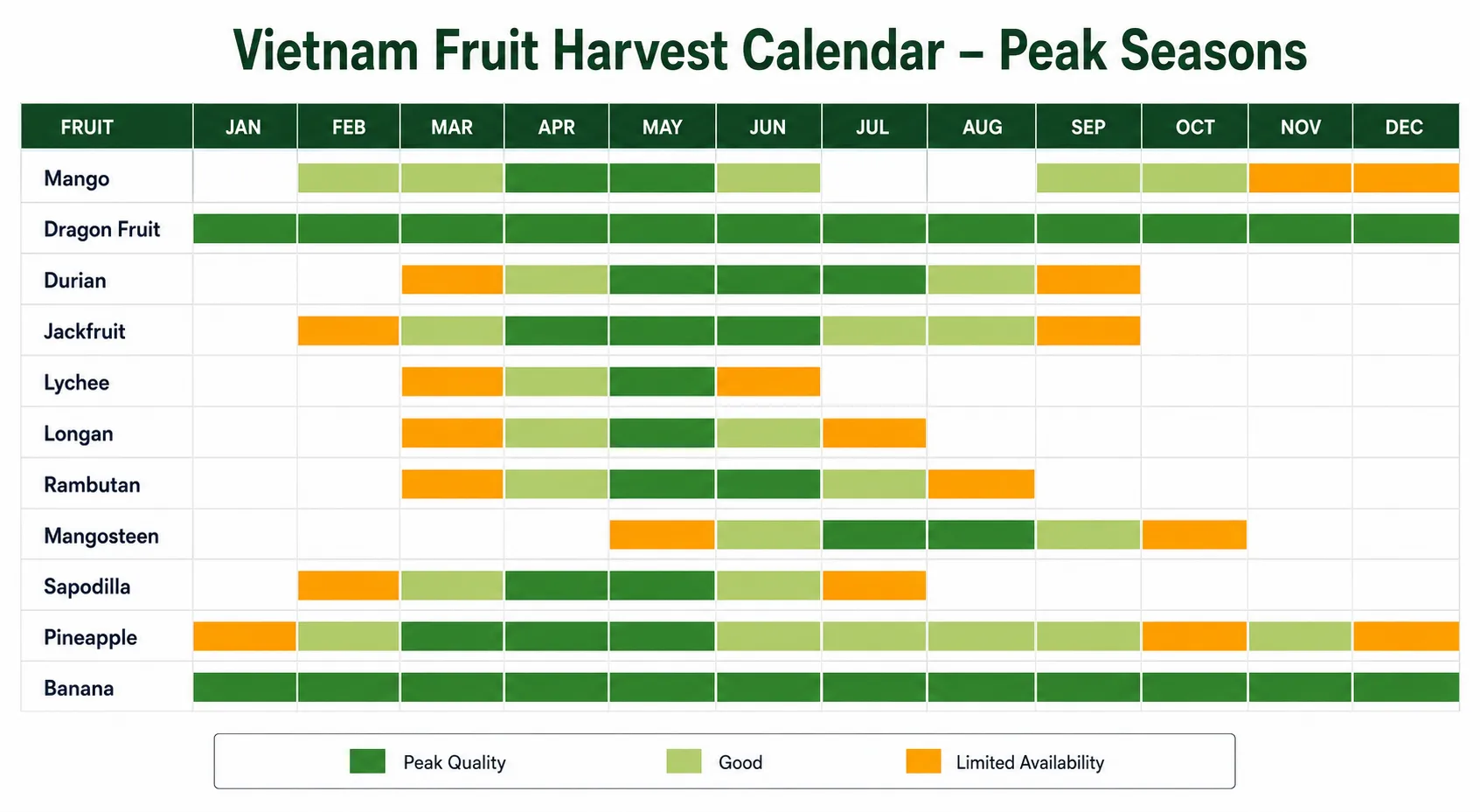
| Mango | April – June | Low | ★★★★★ | High | 7‑10 days |
| Dragon Fruit | March – September | Medium | ★★★★☆ | Very High | 5‑7 days |
| Durian | May – July | High | ★★★★★ | Medium | 10‑14 days |
| Jackfruit | May – June | Medium | ★★★★★ | High | 7‑10 days |
| Lychee | June – July | High | ★★★★★ | Low | 14‑21 days |
| Longan | July – September | Medium | ★★★★★ | High | 7‑10 days |
| Rambutan | June | Medium | ★★★★☆ | Medium | 7‑10 days |
| Mangosteen | May – June | High | ★★★★★ | Low | 14‑21 days |
| Sapodilla | January – February | High | ★★★★☆ | Low | 14‑21 days |
| Pineapple | Year‑round | Low | ★★★★☆ | Very High | 5‑7 days |
| Banana | Year‑round | Low | ★★★★☆ | Very High | 5‑7 days |
Lead time refers to production time after order confirmation; sea freight adds 18‑22 days to US West Coast.
Harvest Calendar by Region
Vietnam’s diverse geography creates distinct harvest windows. Sourcing from multiple regions ensures year‑round supply.
| Region | Key Fruits | Peak Harvest Months | Characteristics |
|---|---|---|---|
| Mekong Delta | Mango, Dragon Fruit, Durian, Jackfruit, Longan, Pomelo | March – September | Highest sweetness, thick flesh, ideal for freeze‑drying |
| Central Highlands | Durian, Avocado, Passion Fruit | May – August | Rich flavor, creamy texture, premium quality |
| Southeast | Dragon Fruit, Cashew, Pineapple | April – October | Vibrant color, firm texture, good for soft‑drying |
| Northern (Sapa, Bắc Giang) | Lychee, Pear, Plum | June – July | Short seasons, floral aroma, high value |
| Central Coast | Mango, Dragon Fruit | March – August | Balanced sweetness, good for both drying methods |
Detailed Seasonal Guide by Fruit
Mango – Peak: March to July
Mango is one of Vietnam’s most exported fruits, with the famous Hoa Loc and Cat Chu varieties from Tien Giang and Dong Thap provinces. The peak season runs from March to July, with southern harvests starting in March–April and northern production extending into September.
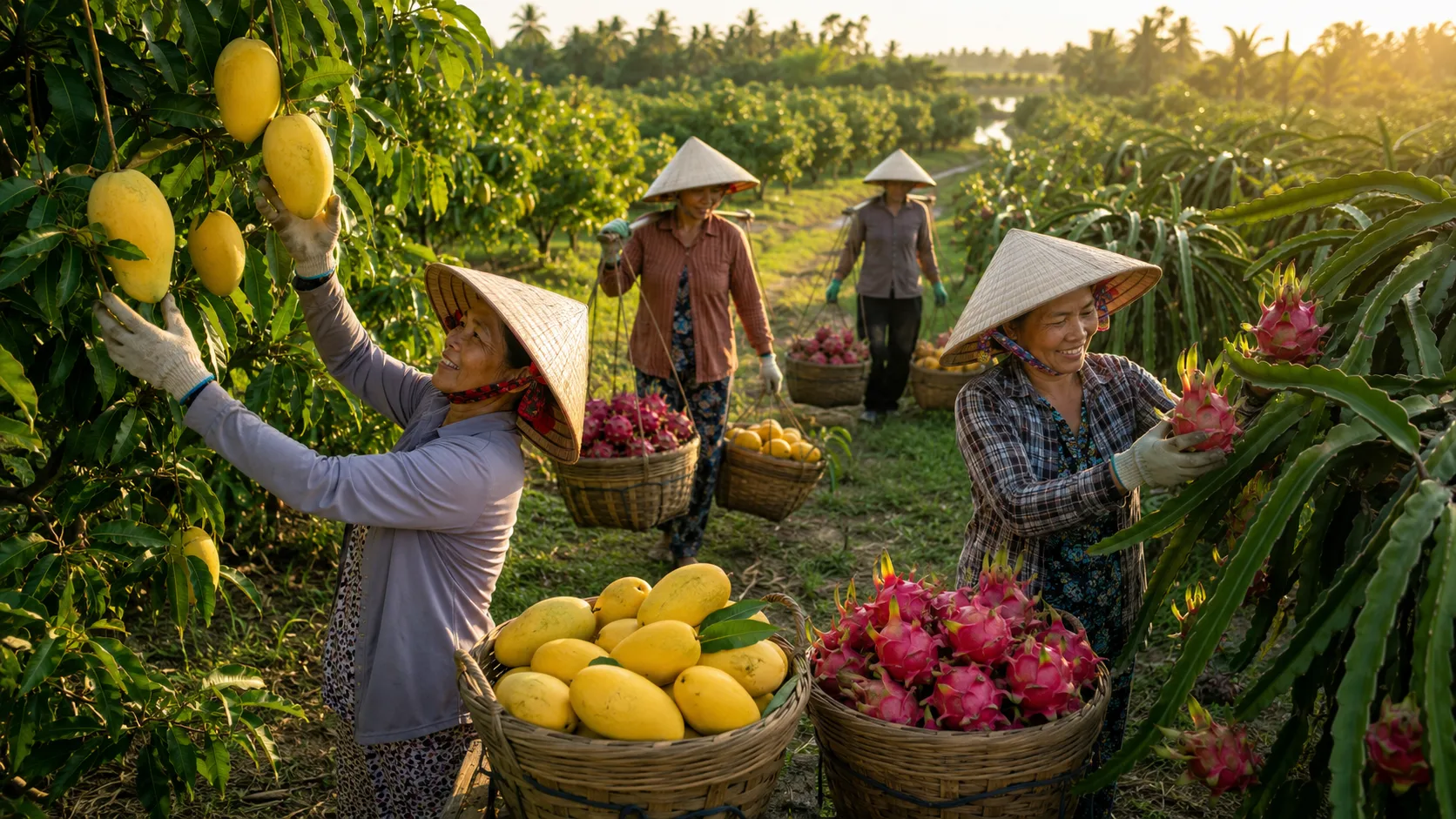
🔍 How we verify quality at the farm gate: When our sourcing team visits farms during harvest, we don’t rely on visual checks alone. We use a handheld refractometer to test Brix (sugar content) on the spot. For mangoes, we only accept fruit above 18 Brix. We also check firmness using a penetrometer – fruit that’s too soft will break during slicing, and fruit that’s too hard won’t develop full flavor during drying.
Quality Parameters:
| Parameter | Target Value | Why It Matters |
|---|---|---|
| Brix (sugar content) | 18‑22° | Higher Brix = more natural sweetness, less added sugar needed |
| Firmness | 5‑7 kg/cm² | Ensures clean slicing and prevents mushiness during drying |
| Moisture | 82‑85% (fresh) | Affects drying time and final texture |
| Color | Golden yellow | Indicates ripeness and affects final product appearance |
- For freeze‑drying: Select mangoes at 18‑22 Brix with firm, golden flesh. The result is crispy, golden slices with intense natural sweetness.
- For soft‑drying: Slightly less ripe fruit with balanced moisture creates a chewy, pliable texture without sugar crystallization.
Dragon Fruit – Year‑Round, Peak: March to September
Dragon fruit is harvested year‑round, but the main season runs from March to mid‑September. Off‑season production is supported by artificial lighting.
| Parameter | Target Value | Why It Matters |
|---|---|---|
| Brix | 12‑14° | Lower than mango, but natural sweetness is still important |
| Firmness | 4‑6 kg/cm² | Prevents breakdown during processing |
| Color (red flesh) | Deep magenta | Indicates high betacyanin content (natural pigment) |
Durian – Year‑Round, Peak: May to September
| Parameter | Target Value | Why It Matters |
|---|---|---|
| Brix | 22‑28° | Extremely high natural sugar content |
| Fat content | 8‑12% | Contributes to creamy texture and mouthfeel |
| Firmness | 3‑5 kg/cm² | Soft enough to process but firm enough to hold shape |
Lychee – Peak: May to July
| Parameter | Target Value | Why It Matters |
|---|---|---|
| Brix | 16‑20° | High natural sweetness, floral notes |
| Firmness | 4‑6 kg/cm² | Ensures clean peeling and prevents mushiness |
| Skin color | Bright red | Indicates freshness and optimal ripeness |
Importer Decision Guide: Freeze Dry vs Soft Dry
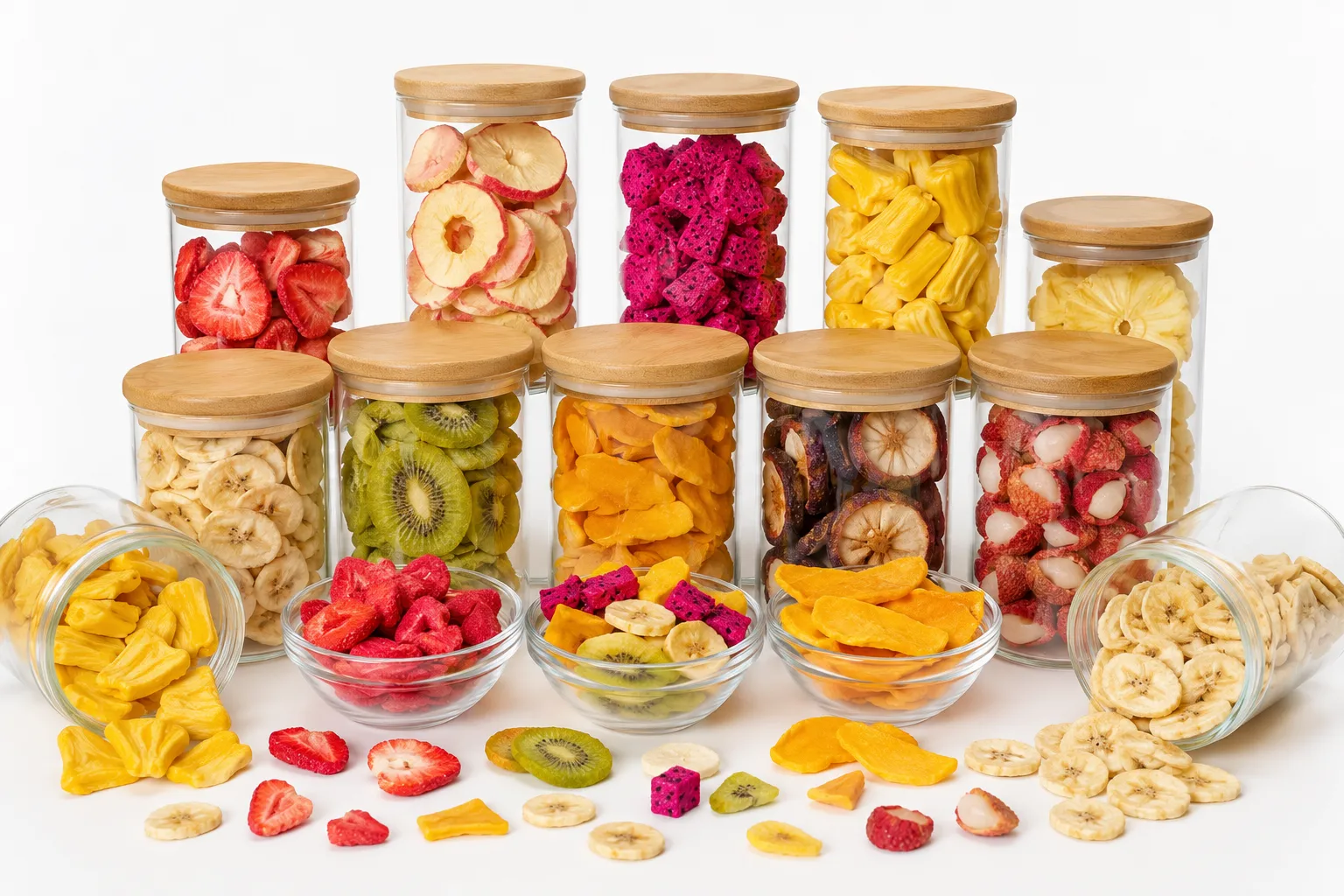
| Criterion | Freeze Drying | Soft Drying |
|---|---|---|
| Moisture content (final) | ≤ 3.8% | 15‑18% |
| Water activity | < 0.25 | 0.55‑0.65 |
| Texture | Crispy, airy, melts in mouth | Chewy, pliable, dense |
| Nutrient retention | > 95% | 80‑90% |
| Shelf life | 24 months | 12 months |
| Added sugar needed | None | Optional (0‑5%) |
| Price point | Premium | Mid‑range |
| Best for | Premium snacks, cereals, chocolate inclusions | Standalone snacks, trail mixes, bakery fillings |
Frequently Asked Questions (B2B)
- Why is seasonal sourcing important for freeze‑dried and soft‑dried fruits?
Seasonal fruit delivers superior flavor, color, texture, and nutritional value, directly impacting the quality of the final dried product. - Which fruits are available year‑round in Vietnam?
Banana, pineapple, guava, papaya, passion fruit, pomelo, longan, and dragon fruit. - What is the shortest fruit season in Vietnam?
Lychee has one of the shortest seasons, lasting from late May to late July. Sapodilla also has a narrow window in January–February. - How should I decide between freeze‑dried and soft‑dried for my product line?
Choose freeze‑dried if you need a clean‑label product with intense color, instant rehydration, and premium shelf appeal. Choose soft‑dried if you are working with a tight budget, require a chewy texture, and can accommodate a slightly shorter shelf life. - Does Hana Nguyen offer samples from different seasons?
Yes. Hana Nguyen provides free samples (100‑200g) for serious B2B buyers, allowing you to test quality before committing to a container order.
References
- Food and Agriculture Organization of the United Nations (FAO). (2023). Tropical Fruit Production Statistics. Rome: FAO.
- United States Department of Agriculture (USDA). (2024). Foreign Agricultural Service: Vietnam Fruit Production Report. Washington, DC: USDA.
- Vietnam Ministry of Agriculture and Environment. (2025). Annual Report on Fruit Production and Export. Hanoi: MARD.
- HACCP International. (2024). Food Safety Certification Standards for Dried Fruit Processing.
- FSSC Foundation. (2023). FSSC 22000 Scheme for Food Safety Management Systems.
Ready to source seasonal Vietnamese fruits for your freeze‑dried or soft‑dried product line?
Contact Hana Nguyen today for a free consultation, samples, and FOB pricing.
📧 Freezedriedhana@gmail.com | 📞 +84 866 946 762