Soft Dried vs Freeze Dried Mango – What’s the Difference for B2B Buyers?
Soft Dried vs Freeze Dried Mango – A B2B Guide to Choosing the Right Format
Understand the differences in processing, texture, nutritional retention, shelf life and cost. Make an informed sourcing decision for your brand or manufacturing line.
Product Specifications – At a Glance
| Parameter | Soft Dried Mango | Freeze Dried Mango |
| Processing method | Low‑temperature air drying or traditional hot‑air drying (50‑70°C) | Rapid freezing to -40°C, then vacuum sublimation |
| Moisture content | 15‑18% | ≤ 3.8% |
| Water activity (Aw) | 0.55‑0.65 | < 0.25 |
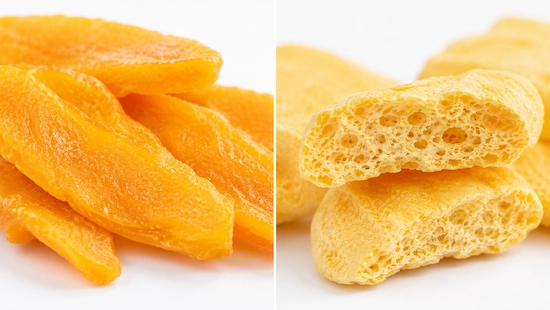
| Texture | Chewy, pliable, dense | Crispy, light, airy, melts in the mouth |
| Colour | Golden yellow (may darken slightly with hot‑air processing) | Bright, vibrant golden yellow |
| Nutrient retention | ~80‑90% (cold drying); lower with hot‑air | >90‑95% (including heat‑sensitive vitamins) |
| Added sugar | Optional (0‑5%); sugar‑free available | None (0% added sugar) |
| Preservatives / SO₂ | None (clean label option) | None (no additives required) |
| Typical shelf life | 12 months | 24 months |
| Bulk packaging | 5kg, 10kg, 15kg foil bags | 5kg, 10kg, 15kg foil bags |
| Container load (20ft) | ≈ 7‑8 metric tons | ≈ 5‑6 metric tons |
| Price point (FOB) | Mid‑range | Premium (higher) |
| Primary applications | Standalone snacks, trail mixes, bakery fillings, confectionery | Premium snacks, cereals, chocolate inclusions, smoothie bowls, beverage powders |
Processing Methods – How Each Format Is Made
The fundamental difference between soft dried and freeze dried mango lies in how moisture is removed.
Soft Dried Mango is produced using gentle low‑temperature drying (heat‑pump or cold drying) typically at 55‑65°C. Some manufacturers may use higher temperatures (50‑70°C) for traditional hot‑air drying, which draws out moisture over several hours. This method preserves a chewy texture and natural sweetness, though extended heat exposure can lead to some loss of heat‑sensitive nutrients like vitamin C and may darken the fruit’s colour. The resulting moisture content is around 15‑18%, giving the mango its characteristic pliable, dense bite.
Freeze Dried Mango begins with rapid freezing of fresh mango slices to ultra‑low temperatures (as low as -40°C), locking in the fruit’s natural structure. The frozen mango is then placed in a vacuum chamber, where a process called sublimation occurs: ice transforms directly into vapour without passing through a liquid phase. This gentle removal of moisture preserves the mango’s cellular integrity, resulting in a crisp, airy, lightweight product. Moisture content is reduced to ≤ 3.8%, and water activity drops below 0.25, creating an environment where microorganisms cannot grow. No preservatives or added sugar are required.
Quality Parameters – Texture, Colour and Flavour
Texture is the most immediately noticeable difference. Soft dried mango offers a chewy, pliable, dense bite – it bends without breaking and has a satisfying resistance when chewed. This texture is ideal for standalone snacks and bakery fillings where a substantial mouthfeel is desired. Freeze dried mango, in contrast, delivers a light, crispy, airy crunch that shatters easily and then melts in the mouth. It absorbs moisture quickly and can be rehydrated almost instantly, making it highly versatile for applications where quick flavour release is beneficial.
Colour is another key differentiator. Soft dried mango typically retains a golden yellow hue, though hot‑air processing may cause slight darkening or browning due to caramelisation of natural sugars. Freeze dried mango preserves the bright, vibrant golden colour of the fresh fruit because the low‑temperature process prevents heat‑induced discoloration. This visual appeal is a significant advantage for premium retail packaging and applications where appearance matters.
Flavour retention favours freeze drying. Because the process involves no heat, the volatile compounds responsible for mango’s sweet, tropical aroma are largely preserved. Freeze dried mango delivers an intense, authentic mango flavour that closely resembles fresh fruit. Soft dried mango, while still flavourful, may have a slightly concentrated, cooked or caramelised note due to the heat applied during drying, especially with traditional hot‑air methods.
Nutritional Retention – Which Format Preserves More Nutrients?
For B2B buyers prioritising nutritional value, freeze drying is the superior choice. Freeze dried mango retains over 90% of its original nutrients, including heat‑sensitive vitamins such as vitamin C and various antioxidants. Because the process operates at low temperatures and under vacuum, the fruit’s nutritional profile remains largely intact.
Soft dried mango, when produced using low‑temperature cold drying, preserves approximately 80‑90% of nutrients. However, traditional hot‑air drying (50‑70°C) can lead to significant losses of vitamin C and other heat‑sensitive compounds. Additionally, some manufacturers add sugar (typically 5%) to soft dried mango to enhance sweetness and texture, whereas freeze dried mango is 100% fruit with zero added sugar – a clean‑label advantage that appeals to health‑conscious consumers and retailers.
Nutritional comparison (per 100g, typical values):
| Nutrient | Soft Dried Mango | Freeze Dried Mango |
| Calories | ~300 kcal | ~350 kcal |
| Total Fat | 0.5 g | 0.5 g |
| Total Carbohydrate | ~80 g | ~85 g |
| Dietary Fiber | ~7 g | ~8 g |
| Sugars (naturally occurring) | ~63 g | ~70 g (0g added) |
| Protein | ~3 g | ~2 g |
| Vitamin C retention | Moderate (60‑80%) | High (>90%) |
Shelf Life, Storage and Logistics
Freeze dried mango has a significantly longer shelf life due to its extremely low moisture content (≤3.8%) and water activity (<0.25). Unopened, it remains stable for 24 months at room temperature (≤25°C, <60% RH) without any preservatives or refrigeration. This extended stability translates into lower inventory management costs and reduced risk of spoilage during long‑distance sea freight.
Soft dried mango, with its higher moisture content (15‑18%), has a shorter shelf life of 12 months. It must be stored in a cool, dry place and, once opened, consumed within 30 days. While still manageable for most supply chains, the shorter window requires more careful inventory rotation and may not be suitable for very long‑term storage or extreme shipping conditions.
From a logistics perspective, freeze dried mango is significantly lighter (by volume) because most of the water has been removed. A 20ft container holds approximately 5‑6 metric tons of freeze dried mango, compared to 7‑8 metric tons of soft dried mango. While the container space utilisation differs, the lighter weight can reduce shipping costs for certain modes of transport, though buyers should calculate per‑unit logistics expenses carefully.
Cost Comparison – Upfront Price vs Long‑Term Value
Freeze dried mango carries a premium price due to the sophisticated equipment, energy requirements and longer processing time involved. The global freeze dried mango market stood at USD 200 million in 2024 and is forecast to reach USD 350 million by 2033, registering a CAGR of 6.5%. The broader freeze‑dried fruits and vegetables market is growing even faster, from $41.74 billion in 2025 to an expected $61.89 billion in 2030 at a CAGR of 8.4%. This premium positioning reflects the product’s superior nutrient retention, longer shelf life and clean‑label appeal.
Soft dried mango is generally more affordable, making it the preferred choice for high‑volume, cost‑sensitive applications. The global dried mango market is estimated at $1.0‑1.2 billion in 2025**, growing at approximately 7% CAGR through 2033. Price differences can be substantial: Vietnam soft dried mango transaction prices in late 2025 averaged around **$4.58 USD per kg, while freeze dried mango commands a significantly higher price point.
For B2B buyers, the decision often comes down to application and target market. Premium product lines benefit from the higher perceived value and clean‑label credentials of freeze dried mango, while mainstream or bulk‑oriented products may be better served by the cost‑efficiency of soft dried mango.
Industrial Applications – Where Each Format Excels
Soft Dried Mango is ideal for:
- Standalone retail snacks (chewy, satisfying bite)
- Trail mixes and nut blends
- Bakery fillings (muffins, cakes, breads)
- Confectionery products (dipped or coated fruit)
- Breakfast cereals (as chewy inclusions)
- High‑volume, cost‑sensitive product lines
Freeze Dried Mango is preferred for:
- Premium retail snacks (crispy, lightweight, visually appealing)
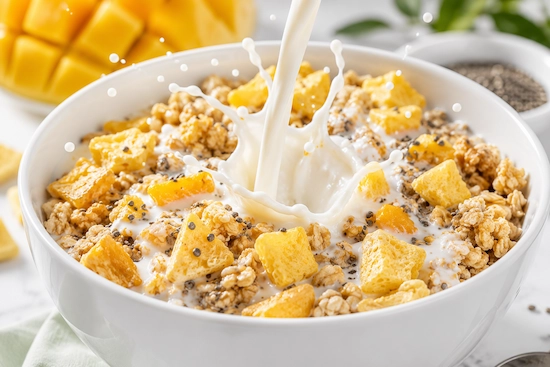
- Breakfast cereals and granola (adds crunch without moisture)
- Chocolate and confectionery inclusions (maintains crispness)
- Smoothie bowls and beverage mixes (rehydrates quickly)
- Baby food and functional nutrition products (high nutrient retention)
- Natural food colouring and flavourings (ground into powder)
- Export to markets requiring extended shelf life
Market Trends – Clean Label and No‑Added‑Sugar Demand
The dried mango market is undergoing a structural shift toward clean label, no‑added‑sugar, and plant‑based products. The global healthy snacks market reached an estimated $101‑108 billion in 2025, with the dried fruit segment growing through consumers trading up from sweetened, preserved products to single‑ingredient formats. The sugar‑free snack sub‑segment has tracked a 9.3% CAGR, significantly outpacing the broader dried fruit category.
For B2B buyers, this trend translates into a clear message: the window to secure supply relationships, establish retail distribution, and become a leader in the clean label dried mango category is open but not indefinitely. Brands entering the no‑sugar dried mango space in 2026 and 2027 will have measurable first‑mover advantage over those entering later.
Frequently Asked Questions (B2B)
- Which format retains more nutrients – soft dried or freeze dried?
Freeze dried mango retains over 90‑95% of its original nutrients, including heat‑sensitive vitamins and antioxidants. Soft dried mango (cold drying) preserves 80‑90%, while traditional hot‑air drying may result in lower retention. - Can I get both formats with no added sugar and no SO₂?
Yes. Hana Nguyen offers both soft dried and freeze dried mango with no added sugar, no SO₂, and no preservatives. Soft dried mango is available in sugar‑free or traditional 5% sugar versions. - What is the MOQ for each format?
One 20ft container (≈7‑8 tons for soft dried, ≈5‑6 tons for freeze dried). Trial orders of 500‑1,000 kg are available at a higher per‑kg rate. - Can I get free samples of both formats?
Yes. Free 100‑200g samples (buyer pays shipping) are available for both soft dried and freeze dried mango. - How long does shipping take to the USA?
Production 7‑10 days, sea freight 18‑22 days to US West Coast. Total 45‑60 days including customs clearance. - Can I mix soft dried and freeze dried mango in one container?
Absolutely. Mixed container service allows combination of different fruits and formats in one 20ft or 40ft container, each in separate, labelled cartons. - What payment terms do you accept?
30% deposit T/T, 70% against copy of Bill of Lading. L/C at sight for long‑term contracts (≥6 months). - Is the product organic certified?
Currently, Hana Nguyen is notcertified organic. Products are conventional, grown under Good Agricultural Practices (GAP), and meet US/EU pesticide residue limits. - What documentation is provided for customs clearance?
Commercial invoice, packing list, Bill of Lading, phytosanitary certificate, COA (moisture, Aw, microbiology, SO₂‑free), and FDA prior notice for US shipments.